Among the many routine maintenance tasks that vehicle owners tend to overlook, wheel alignment ranks near the top of the list. It’s invisible, it doesn’t come with a warning light, and it rarely causes an immediate, dramatic problem — which is exactly why it’s so easy to ignore. Yet skipping regular alignment checks is one of the most quietly expensive habits a driver can develop.
What Wheel Alignment Actually Does
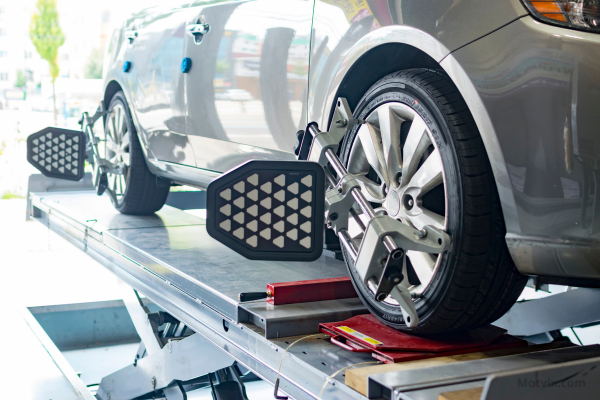
Wheel alignment refers to the adjustment of a vehicle’s suspension system — the mechanism that connects the car to its wheels. When alignment is properly calibrated, all four tires make uniform, consistent contact with the road surface. When it’s off, even slightly, the consequences ripple through multiple systems of the vehicle simultaneously.
Misalignment is not always caused by a dramatic event like hitting a pothole. It can develop gradually over time through normal driving, speed bumps, minor curb contact, and general road wear. That gradual nature is part of what makes it financially dangerous: drivers often don’t notice the problem until the damage is already done.
The True Cost of Neglecting Alignment
Accelerated Tire Wear
Tires are one of the most significant recurring expenses in vehicle ownership. When alignment is off, tires don’t wear evenly. Instead, one edge of the tire degrades far faster than the rest, dramatically shortening the tire’s usable lifespan. What might have been a set of tires lasting several years could wear out in a fraction of that time — forcing an earlier and entirely avoidable replacement.
Reduced Fuel Efficiency
A misaligned vehicle creates unnecessary rolling resistance. In practical terms, the engine has to work harder to move the car forward, which means it burns more fuel to cover the same distance. Over weeks and months of daily driving, that increase in fuel consumption translates into a real and measurable financial cost — one that compounds quietly at every fill-up.
Added Stress on Suspension and Steering Components
Poor alignment doesn’t only affect tires and fuel. The uneven forces generated by misaligned wheels place additional strain on suspension components, steering linkages, and wheel bearings. These are components that are significantly more expensive to repair or replace than a standard alignment service. Addressing alignment regularly is, in effect, a way of protecting a much larger investment.
Safety Is Part of the Equation
Beyond the financial argument, there is a fundamental safety dimension to wheel alignment. A vehicle with significant misalignment may pull to one side, require constant steering corrections, or respond unpredictably in emergency braking situations. These are not abstract risks — they are real handling compromises that can affect a driver’s ability to maintain control, particularly in adverse weather conditions.
Keeping alignment properly calibrated means the vehicle behaves as its engineers intended, which is always the safest baseline.
How Often Should You Check Alignment?
Most automotive professionals recommend having wheel alignment inspected at least once a year, or whenever a vehicle has been subjected to a significant impact — a severe pothole, an accidental curb strike, or a minor collision. It’s also advisable to check alignment whenever new tires are installed, to ensure the new investment isn’t immediately compromised by an underlying issue.
Many tire shops and dealerships include alignment checks as part of broader service packages, making it straightforward to incorporate into an existing maintenance routine.
A Small Service with a Large Return
Wheel alignment is not a glamorous maintenance item. It doesn’t come with the satisfaction of a freshly detailed interior or the visibility of new brake pads. But the return on investment is remarkably strong. A periodic alignment service protects tire longevity, preserves fuel economy, reduces mechanical wear, and maintains the vehicle’s handling integrity.
In the economy of vehicle ownership, few maintenance tasks deliver more value per dollar than keeping the wheels pointed in exactly the right direction.