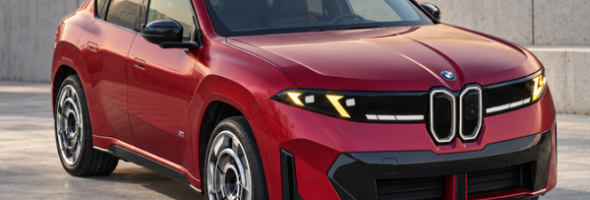
Americans are holding onto their cars longer than at any point in history — the average vehicle on US roads is now 12.8 years old, according to Mobility Global data, the oldest figure ever recorded. At the same time, the average new car now costs nearly $50,000. Put those two facts together and buyers are making one of the biggest purchases of their lives with the expectation it will last well over a decade. The problem, according to a growing chorus of industry analysts, is that nobody — including the automakers themselves — actually knows whether today’s software-heavy vehicles are built to hold up that long.
A car that’s never “finished”
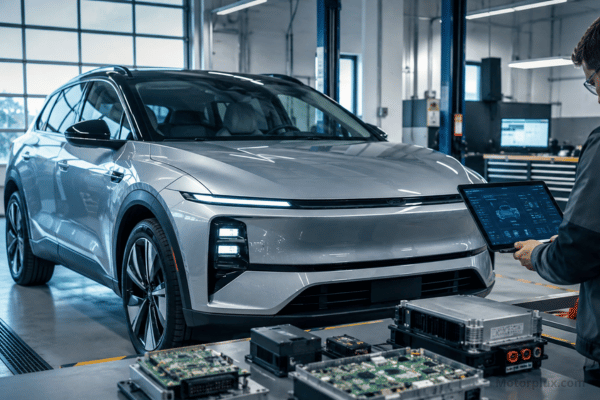
Modern vehicles increasingly rely on centralized computers and software to run functions that used to be purely mechanical, from braking assistance to climate control to how the infotainment system behaves. These software-defined vehicles, or SDVs, are also typically connected to cellular networks, letting automakers push over-the-air updates, diagnose problems remotely, and add features long after a car leaves the factory. Rivian’s chief software officer, Wassym Bensaid, frames that as a fundamental shift in what a car even is: rather than a product that’s frozen the moment it’s sold, a software-defined vehicle is one that keeps improving over its life through OTA updates.
That’s the optimistic version. The less comfortable question is what happens when the hardware inside an aging vehicle can no longer keep up with the software running on top of it. “We honestly don’t know how long these vehicles will last,” said Sam Fiorani, senior vice president of vehicle forecasting at AutoForecastSolutions. “We’re already seeing problems with hardware not being able to deal with new software.”
Features with an expiration date
Sam Abuelsamid, vice president of market research at Telemetry, expects a common pattern to emerge: features get actively updated for a few years after a vehicle is built, then gradually stop receiving upgrades as the underlying hardware falls behind what new software requires. Automakers will likely keep providing baseline support — safety recalls, security patches, critical bug fixes — well beyond that point, in part because product liability concerns give them a strong incentive to keep fixing anything that touches safety. But the richer, more advanced features that make a car feel current may simply age out.
This isn’t entirely hypothetical. In 2022, AT&T shut down its 3G wireless network, and millions of vehicles across a wide range of brands lost features that depended on it — emergency response systems, portions of navigation, and pieces of infotainment — without a single line of the car’s own software changing. The vehicles still drove fine. Owners simply discovered that features they’d paid for stopped working because a third party had retired the network underneath them, a preview of the kind of quiet obsolescence that more deeply software-dependent vehicles may face at a larger scale.
Tesla’s own history with self-driving hardware illustrates the risk directly. The company said in 2016 that every vehicle it built came equipped with the hardware needed for full self-driving, and reaffirmed that promise in 2019 by naming its Hardware 3 computer as the one that would eventually deliver it. This year, Tesla acknowledged that older vehicles will actually need new computers and cameras to run its unsupervised full self-driving system, offering qualifying owners a hardware upgrade or a discounted trade-in. Tesla did not respond to a request for comment on the shift.
Cars cost far more than phones — but get far less protection
The comparison that industry watchers keep coming back to is the smartphone: expensive, software-dependent, useful for a few years, and eventually retired not because it’s broken but because it can no longer run current software. The difference is that regulators have started stepping in on the phone side. Since June 2025, European Union ecodesign rules have required smartphone and tablet makers to provide at least five years of operating system and security updates, seven years of spare-parts availability, and a repairability label on the box. No equivalent requirement exists for vehicles, in the US or the EU, even though a new car represents a purchase many times larger than a phone and, for most owners, needs to function reliably for far longer.
Why automakers have an incentive to keep building this way anyway
Part of the answer is money. S&P Global Mobility projects that connected-vehicle and subscription-service revenue will grow from roughly $6 billion in 2024 to around $15 billion by 2030, as automakers look for ways to keep earning from a vehicle after the initial sale — through data services, feature unlocks, and software subscriptions. Software-defined architecture is what makes that recurring revenue model possible in the first place, giving automakers a financial reason to keep pushing further into software-dependent design even as questions about long-term support remain unresolved.
For buyers, the upshot is a new and largely unanswered variable in the traditional car-ownership calculus. A vehicle’s real-world lifespan has always depended on how well its engine, transmission, and body held up. Increasingly, it may also depend on how long an automaker chooses to keep supporting the software running underneath the hood — a decision that, right now, no manufacturer is willing to put a number on.