Porsche has laid out the most significant change of direction in its recent history. At its Capital Markets Day in Weissach, Germany, on October 7, CEO Michael Leiters presented “Sportwagenschmiede ’35” (roughly “Sports Car Forge ’35”), a medium-term strategy that trades the brand’s all-in electric ambitions for a leaner company, fewer but more profitable models, and a renewed commitment to combustion and hybrid power where customers still want it.
The plan arrives after a painful stretch for the Stuttgart automaker. Porsche’s operating return on sales collapsed to just 1.1 percent in 2025, down from 14.1 percent the year before, while net income fell more than 91 percent to €310 million. Weak demand in China, the costly ramp-up of electric models, and U.S. tariffs all weighed heavily on results.
“At the moment, the main focus is on reducing costs and making the company more financially robust,” Leiters said.
Fewer People, Fewer Variants, Lower Break-Even
The most immediate impact falls on the workforce. Porsche will reduce its headcount by about 9,000 positions, roughly 25 percent of its global staff, by 2035. Management roles will shrink by 40 percent. The reductions were agreed with employee representatives in a “Future Package” signed on July 27, and compulsory layoffs are ruled out through 2035. Instead, Porsche will rely on natural attrition, partial retirement, and voluntary severance. The same agreement includes €2.1 billion in investment at the company’s Zuffenhausen and Weissach sites.
Beyond staffing, Porsche wants to cut development costs by up to 20 percent per model and personnel costs by up to 30 percent. It will also offer about 20 percent fewer model variants, a move designed to concentrate sales on fewer, better-equipped cars. The goal is to push the company’s break-even point below 200,000 vehicles a year, giving Porsche the flexibility to build fewer cars and still make money.
On the revenue side, Porsche aims to raise the average selling price of its range-topping models by 20 percent and expand its Sonderwunsch personalization program, which lets customers commission one-off specifications.
The Product Plan: Combustion Is Back on the Table
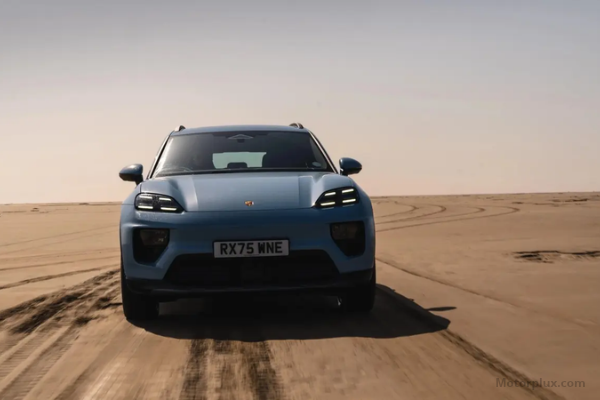
The most headline-grabbing changes concern the model lineup. Porsche confirmed that a combustion-engine and plug-in hybrid Macan will return, sitting alongside the current Macan Electric. The demand case is clear: in the first half of 2026, Porsche delivered 19,695 combustion Macans compared with 15,620 electric ones. The new gas-powered model is expected around 2028 and will use the Premium Platform Combustion it shares with the Audi Q5.
The 718 Boxster and Cayman will go electric, with the new models due within the next two years. Meanwhile, Porsche is studying a three-row SUV positioned above the Cayenne, using combustion-based architecture, while a previously planned large electric SUV, known internally as K1, has been put on hold.
Under the new strategy, Porsche will launch combustion and hybrid models at a 2:1 ratio to fully electric models, a striking reversal for a brand that only a few years ago targeted more than 80 percent EV sales by 2030.
The 911 Stays Pure, and a New Halo Car Is Coming
For enthusiasts, the clearest message came on the 911. “I can assure you: the 911 will never be electric,” Leiters said. Instead, the iconic sports car will gain more “highly emotive” derivatives, with performance hybrid technology playing a central role.
Porsche also confirmed a new mid-engine halo car that will sit above the 911 in the lineup, effectively a spiritual successor to the 918 Spyder. Reports suggest it will use a V8 engine and cost well over €500,000. A full concept reveal is expected in mid-October. From 2030, Porsche says it will introduce at least one “brand-defining” new model every year.
Financial Targets
Porsche is guiding for a 5.5 to 7.5 percent operating return on sales in 2026, after already recovering to 7.8 percent in the first half of the year. In the medium term, around 2030 to 2031, the company targets 10 to 15 percent, with a long-term goal of 15 percent. Third-quarter results are due on October 27.
Why It Matters
Porsche’s reset is part of a broader industry shift. With U.S. regulators loosening fuel economy rules, Chinese demand for European luxury cars slowing, and many buyers still hesitant about EVs, automakers are rebalancing their plans toward hybrids and combustion engines. Porsche insists it is not abandoning electrification, but it is clearly choosing to follow customer demand rather than regulatory deadlines. For a brand built on emotion and exclusivity, the bet is that smaller, more profitable, and more flexible beats bigger and fully electric.