Most drivers think about braking distance only in emergency situations — that heart-stopping moment when something unexpected appears in the road ahead. But automotive safety experts and experienced mechanics will tell you something different: the distance it takes your vehicle to come to a complete stop is one of the most revealing indicators of your car’s overall mechanical condition.
In other words, your braking distance is not just a safety number. It is a diagnostic signal.
More Than Brake Pads
When stopping performance begins to decline, most drivers instinctively blame the brake pads. While worn pads are certainly a common culprit, they are only one piece of a much larger system. Braking efficiency depends on the coordinated performance of several interconnected components.
- Brake rotors: Warped or unevenly worn rotors reduce the friction surface and can cause vibration under braking, extending stopping distances significantly.
- Brake fluid: Moisture contamination in brake fluid lowers its boiling point, which can lead to vapor lock under heavy braking — a condition that dramatically reduces hydraulic pressure and responsiveness.
- Tires: Tread depth, tire pressure, and rubber compound condition all directly affect grip levels. Even perfectly maintained brakes cannot compensate for tires that are unable to maintain adequate contact with the road surface.
- Shock absorbers and suspension: Worn suspension components affect how evenly weight is distributed across all four wheels during a stop. Poor weight transfer management translates directly into longer and less controlled braking.
- ABS and electronic systems: The anti-lock braking system and its related sensors must function correctly for the system to modulate brake pressure efficiently. A malfunctioning sensor can render the entire system less effective without triggering an obvious warning.
How to Recognize the Warning Signs
Braking distance rarely increases overnight. The deterioration is usually gradual, which makes it easy to overlook — particularly for drivers who use the same vehicle every day and adapt unconsciously to its changing behavior.
There are, however, specific sensations and patterns that should prompt immediate attention:
- A soft or spongy pedal feel that requires more pressure than usual to achieve the same deceleration.
- Vibration through the steering wheel or brake pedal when stopping from higher speeds.
- The vehicle pulling to one side during braking, which may indicate uneven pad wear or a stuck caliper.
- Squealing or grinding noises that appear specifically under braking.
- A noticeable increase in the distance required to stop compared to what you were previously accustomed to.
The Role of Driving Habits
Vehicle condition is only part of the equation. Driver behavior plays an equally important role in both braking effectiveness and the rate at which braking components wear out.
Aggressive, late braking generates significantly more heat and stress on pads, rotors, and fluid than smooth, anticipatory deceleration. Drivers who habitually brake at the last moment not only shorten the lifespan of their components but also leave themselves with less margin for error in genuine emergency situations.
Smooth, progressive braking — beginning earlier and applying moderate pressure — protects hardware, keeps temperatures lower, and preserves the responsiveness of the system over time.
Maintenance as a Safety Investment
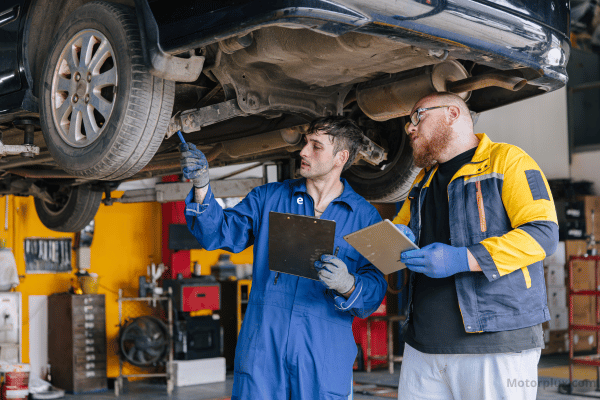
Treating the braking system as a routine maintenance priority rather than a reactive repair item is the most effective approach to preserving stopping performance. Regular inspections of pad thickness, rotor condition, fluid quality, and tire health provide an accurate picture of where the system stands before problems become emergencies.
When braking distance increases, the vehicle is communicating something important. The question is whether the driver is listening.
Understanding what your stopping distance reveals about your car’s true condition is not just a technical exercise — it is a fundamental aspect of responsible vehicle ownership and everyday road safety.