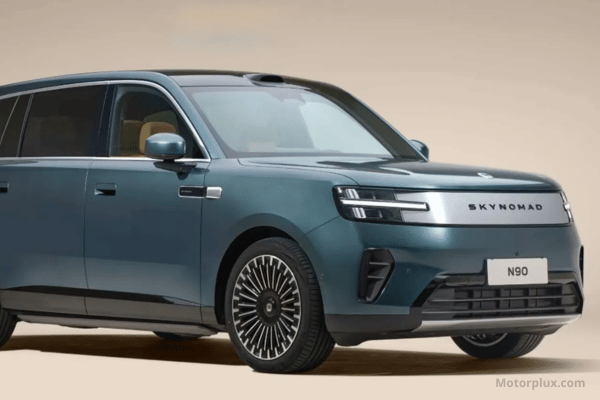
Xiaomi is expanding well beyond the electric sedans and SUVs that first put its automotive division on the map, launching an entirely new sub-brand called SkyNomad dedicated to range-extender SUVs. The move introduces two models at once — the full-size N90 and the midsize-to-large N70 — putting Xiaomi in direct competition with some of China’s most established range-extender specialists.
Why a separate brand, not just new models
Rather than adding range-extender variants to its existing Xiaomi-badged lineup, the company chose to launch SkyNomad as a distinct brand identity built specifically around extended-range electric vehicle (EREV) technology. That decision mirrors a pattern already well established in China’s EV market, where companies like Huawei and GAC have spun up dedicated sub-brands to target specific vehicle segments or technologies without diluting their primary brand positioning. For Xiaomi, creating SkyNomad as a standalone identity signals a genuine, sustained commitment to the range-extender segment rather than a single opportunistic model launch, and gives the company room to build out a distinct product family over time without every new SkyNomad vehicle being compared directly against Xiaomi’s electric sedans and crossovers.
Two SUVs, two very different buyers
The N90 and N70 give SkyNomad an immediate spread across the range-extender SUV market rather than launching with a single model and expanding later. The N90 is positioned as a full-size SUV, while the N70 sits in the midsize-to-large segment — a deliberate structure that lets Xiaomi’s new brand address both buyers looking for maximum interior space and capability, and those wanting a somewhat more manageable footprint without sacrificing the core range-extender formula. Both models emphasize spacious interiors, long EV-only driving range before the onboard generator engine needs to activate, and Xiaomi’s now-familiar suite of smart cabin features, carried over from the company’s broader consumer electronics ecosystem and its existing electric vehicle lineup.
Pricing for both SUVs has been positioned to compete directly with established players in the range-extender space, an area of China’s EV market that has grown rapidly as automakers look for a middle path between full battery-electric vehicles and traditional gas-powered models — offering electric-first daily driving with a gasoline engine on board purely as a generator for longer trips, removing the range anxiety that still holds some buyers back from a pure EV.
Taking on AITO, Li Auto, and XPeng directly
The range-extender SUV segment in China has become one of the most fiercely contested categories in the entire domestic EV market, with AITO (backed by Huawei), Li Auto, and XPeng all fielding well-established, high-volume models built around the same core EREV formula. By launching two SUVs simultaneously rather than a single entry, Xiaomi is signaling that it intends to compete across multiple size classes from day one rather than testing the segment cautiously with one model before committing further. That’s a notably aggressive posture for a first-generation product launch, and it reflects how quickly Xiaomi’s automotive ambitions have scaled since the company first entered the EV market.
What it means for Xiaomi’s broader auto strategy
SkyNomad’s launch shows Xiaomi is no longer content to compete purely in the battery-electric space where it first built its automotive reputation. Range-extender technology requires a genuinely different engineering approach — balancing a combustion generator engine, a battery pack sized for daily EV-only use rather than maximum range, and the packaging challenges of fitting both systems into a single vehicle — and standing up a dedicated brand for it suggests Xiaomi sees long-term volume potential in the format rather than viewing it as a stopgap technology on the way to an all-electric future.
For competitors already established in the range-extender space, Xiaomi’s entry via a dedicated, well-resourced sub-brand is a serious new source of competition rather than a minor product-line extension. With two SUVs launching simultaneously across different size classes, SkyNomad arrives ready to contest a meaningful share of the segment rather than easing in gradually — a strategy that reflects just how quickly the range-extender category has become central to China’s broader EV competition, and one that legacy automakers watching Xiaomi’s rapid expansion will need to take seriously.