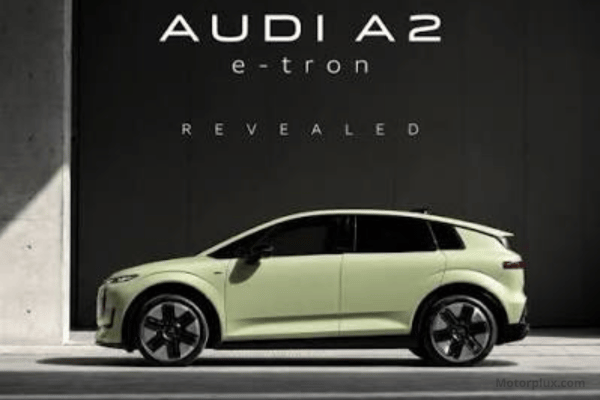
Audi has revived one of its most fondly remembered nameplates for an entirely new era. The new A2 e-tron, unveiled this week at a world premiere in Paris, isn’t just a nostalgic callback to the quirky, aluminum-bodied A2 of the early 2000s — it’s the most efficient production car Audi has ever built, achieving a WLTP-rated energy consumption of just 12.8 kWh per 100 kilometers, a figure that puts it in rare company among electric vehicles of any brand.
A comeback built on restraint, not spectacle
The original A2, launched in 1999, was a commercial disappointment for Audi — its lightweight aluminum body was too expensive to produce, and its unconventional styling never quite found its audience. But it became something of a cult favorite among engineers and enthusiasts for embodying Audi’s old “Vorsprung durch Technik” (“progress through technology”) ethos in its purest form: genuine innovation in service of everyday usability, rather than horsepower or luxury for their own sake.
The new A2 e-tron leans into that same philosophy rather than chasing headline-grabbing power figures or the biggest possible battery. Built on Volkswagen Group’s updated MEB+ electric platform, the compact five-door hatchback measures 4.32 meters (about 170 inches) long, slotting in below the Q4 e-tron and directly replacing the outgoing A1 and Q2 in Audi’s European lineup. Rather than competing on size or spectacle, Audi concentrated its engineering effort on the fundamentals that matter most for everyday electric driving: consumption, aerodynamics, usable interior space, and a genuinely flexible platform.
The numbers behind the efficiency claim
Audi’s efficiency achievement comes from a combination of careful engineering choices rather than any single breakthrough. A drag coefficient of just 0.24, silicon carbide semiconductors in the power electronics, polished gear teeth, and low-viscosity transmission oils all contribute to the A2 e-tron’s class-leading consumption figures. The car is offered with three battery sizes — 52 kWh, 61 kWh, and 84 kWh — across four power outputs ranging from 125 kW (168 horsepower) up to a genuinely quick 240 kW (322 horsepower) with 402 lb-ft of torque, good for a 0-to-62-mph sprint of 5.7 seconds in the top trim.
The most efficient configuration, the 140 kW (190-horsepower) version, achieves that headline 12.8 kWh/100 km figure, while the longest-range model — the 170 kW variant paired with the 84 kWh battery — delivers up to 646 kilometers (401 miles) of WLTP-rated range. That’s a genuinely useful real-world range figure from a compact hatchback, achieved primarily through efficiency rather than simply stuffing in the largest possible battery pack.
A thoughtfully designed interior to match
Inside, the A2 e-tron pairs its efficiency focus with a genuinely modern cabin. An 11.9-inch Audi virtual cockpit plus sits alongside a 12.8-inch curved MMI touch display, running Audi’s latest infotainment system with an AI-powered assistant and an integrated e-tron route planner that accounts for charging stops automatically. The cabin also includes the Fidlock magnetic fastening system as a premium-segment first, along with a short overhang and a comparatively long 2.77-meter wheelbase that Audi says gives the car a noticeably spacious feel despite its compact footprint.
Built at home, priced for the mainstream
Audi is manufacturing the A2 e-tron at its home plant in Ingolstadt, Germany, using existing robots and production equipment — a choice the company frames as evidence of efficient, sustainable production alongside the car’s efficient driving characteristics. Orders open in Germany on September 10, 2026, with pricing starting at €38,200 (roughly $41,600 to $44,300 depending on current exchange rates) for the entry-level 125 kW version, rising to €51,200 for the range-topping 240 kW model. First customer deliveries are scheduled for December 2026.
That pricing puts the A2 e-tron in direct competition with other volume-oriented compact EVs in Europe, including Volkswagen’s own ID.3 Neo and the Renault Scenic E-Tech — a notable shift for Audi, a brand that has historically positioned itself above the mainstream segment on price. By stepping into that more accessible territory with a genuinely differentiated efficiency story, Audi is betting that European buyers who want a premium badge without a premium-sized price tag will find the A2 e-tron’s combination of range, efficiency, and everyday usability hard to pass up.
What it means for EV shoppers
For now, Audi has no confirmed plans to bring the A2 e-tron to the United States, with the car engineered and positioned specifically for the European compact segment. But its debut still matters well beyond Europe’s borders: it’s a clear signal that even premium automakers are finding real competitive advantage in efficiency-first engineering rather than simply chasing bigger batteries and higher horsepower figures. For an industry still working out how to make EVs both genuinely appealing and realistically affordable, the A2 e-tron’s approach — smart aerodynamics, efficient hardware, and a right-sized battery — offers a template other automakers may find themselves following as they look for level-headed ways to expand access to electric driving.