Every day, millions of large commercial trucks travel highways and city roads alongside passenger vehicles. These massive machines are essential to the economy, transporting goods across vast distances — but they also present unique challenges for everyday drivers. Understanding how to safely share the road with large trucks is not just useful knowledge; it can be life-saving.
Why Large Trucks Demand Extra Caution
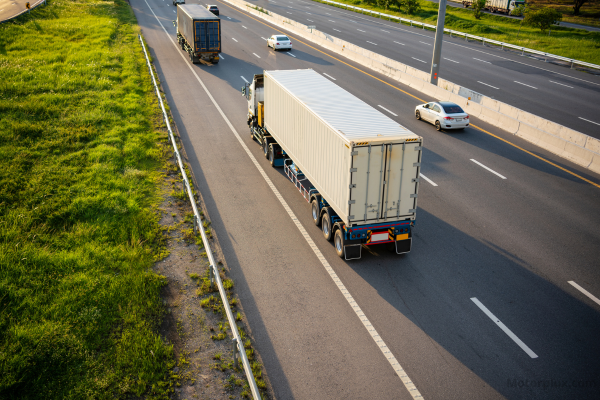
Commercial trucks, including semi-trailers and tractor-trailers, can weigh up to 40 times more than a typical passenger car. That enormous mass means stopping distances are significantly longer, maneuverability is more limited, and the consequences of a collision are far more severe for smaller vehicles. Recognizing these physical realities is the first step toward safer driving behavior around them.
Unlike passenger cars, large trucks have substantial blind spots — often referred to as no-zones — on all four sides. These zones extend far behind the trailer, along both sides, and directly in front of the cab. If you cannot see the truck driver’s mirrors, the driver almost certainly cannot see you.
Key Safety Practices Every Driver Should Follow
Maintain Safe Following Distance
Tailgating any vehicle is dangerous, but following a large truck too closely is particularly hazardous. In the event of sudden braking, a passenger car following too closely has almost no reaction time. Experts consistently recommend maintaining a following distance of at least four seconds when traveling behind a commercial truck — and even more in adverse weather conditions.
Avoid Lingering in Blind Spots
One of the most common mistakes drivers make is traveling alongside a truck for extended periods. If you need to pass, do so decisively and efficiently, returning to a safe position ahead of the truck as quickly as traffic allows. Spending unnecessary time beside a truck dramatically increases the risk of being caught in a dangerous situation if the driver changes lanes or encounters a road hazard.
Give Trucks Space When Turning
Large trucks require wide turning radiuses, particularly when making right turns. A truck may swing left before executing a right turn, creating a gap that inexperienced drivers sometimes try to fill — only to find themselves caught between the truck and the curb. Always give trucks generous space at intersections and avoid squeezing into what appears to be an open lane near the front of a turning vehicle.
Be Cautious When Passing
When passing a large truck on a highway, always pass on the left side where the driver’s visibility is better. Signal clearly, accelerate to complete the pass quickly, and avoid cutting back in front of the truck until you can see the full front of the vehicle in your rearview mirror. Cutting in too soon forces the truck driver to brake suddenly — a dangerous and potentially catastrophic situation given the vehicle’s mass.
Watch for Wind Turbulence
Large trucks traveling at highway speeds generate significant air displacement. Smaller vehicles, particularly motorcycles and compact cars, can be affected by turbulence when passing or being overtaken by a truck. Maintain a firm grip on the steering wheel and be prepared for a brief moment of instability when a large truck passes you at speed.
Communication and Awareness on the Road
Truck drivers are trained professionals who work long hours under demanding conditions. Showing mutual respect on the road goes a long way. Avoid sudden lane changes in front of trucks, use your signals consistently, and never engage in aggressive driving behavior near large commercial vehicles. A small act of impatience near a truck can escalate into a situation with no good outcome.
It is also worth noting that trucks may take longer to accelerate from a stop, particularly when loaded. Allowing adequate merging space and avoiding unnecessary horn use helps maintain a calm, predictable traffic environment that benefits all road users.
The Bottom Line
Sharing the road with large commercial trucks requires awareness, patience, and deliberate driving habits. These vehicles are not going away — and nor should they, given their critical role in modern supply chains. What drivers can control is their own behavior: staying out of blind spots, maintaining safe distances, passing decisively, and respecting the physical limitations that come with operating a 40-ton vehicle. Applied consistently, these practices make highways measurably safer for everyone.