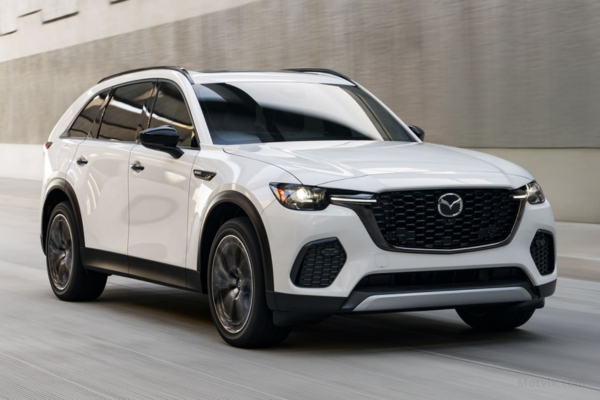
Mazda has officially unveiled the CX-70 plug-in hybrid electric vehicle (PHEV) as its new flagship model for the North American market, signaling a decisive step in the brand’s ongoing evolution toward premium electrified mobility. The debut marks one of the most significant model introductions in Mazda’s recent history, combining the automaker’s renowned commitment to driver-focused design with a powertrain strategy built for an increasingly electrified future.
The CX-70 PHEV enters a competitive segment where consumers increasingly expect not only sophisticated styling and refined interiors, but also meaningful fuel efficiency and reduced emissions. Mazda’s decision to lead with a plug-in hybrid configuration reflects a carefully considered approach — one that bridges the gap between conventional powertrains and full electrification without compromising the driving experience the brand has always prioritized.
A Flagship Designed for the North American Driver
The CX-70 is a two-row SUV positioned above the CX-50 in Mazda’s lineup and tailored specifically to the preferences and practical demands of North American buyers. This market has long favored larger, more spacious vehicles, and Mazda has responded with a model that delivers commanding road presence while maintaining the brand’s signature attention to interior craftsmanship and driving dynamics.
As a PHEV, the CX-70 pairs a traditional internal combustion engine with an electric motor and an onboard battery capable of supporting a meaningful all-electric range for daily commuting. This configuration allows drivers to operate the vehicle on electric power alone for shorter trips, while the combustion engine provides confidence and range for longer journeys — a practical balance that resonates strongly with North American driving patterns.
Performance and Technology at the Forefront
Mazda has engineered the CX-70 PHEV to deliver a notable increase in combined system output compared to its non-electrified counterparts. The result is a vehicle that feels responsive and capable, whether navigating urban environments or tackling open highways. Mazda’s all-wheel-drive system, integrated with the hybrid powertrain, ensures confident handling across a wide range of conditions — a key consideration for buyers in regions with variable weather and terrain.
Inside the cabin, the CX-70 reflects Mazda’s Kodo design philosophy with premium materials, an intuitive infotainment interface, and an array of advanced driver-assistance technologies. The brand continues to position the interior experience as a genuine differentiator, offering an environment that feels more aligned with luxury-segment competitors than with mainstream SUV alternatives.
Mazda’s Broader Electrification Strategy
The CX-70 PHEV’s debut is not an isolated product decision — it is a visible expression of Mazda’s broader global electrification roadmap. The automaker has made clear its intention to expand its electrified lineup progressively, balancing battery electric vehicles, plug-in hybrids, and mild hybrids across different markets and customer needs.
By designating the CX-70 PHEV as its North American flagship, Mazda sends a clear message: electrification and premium positioning are not mutually exclusive. The brand is betting that a sophisticated, driver-centric plug-in hybrid can carve out a compelling space in a market dominated by both legacy automakers and emerging electric-first competitors.
A Bold Statement for the Road Ahead
The arrival of the CX-70 PHEV represents more than a product launch. It is a declaration of intent from a brand that has consistently chosen craftsmanship and driving engagement over volume and compromise. For North American consumers seeking a flagship SUV that merges electrified efficiency with genuine driving pleasure, Mazda’s newest model offers a persuasive and timely proposition.
As the automotive landscape continues to shift toward electrification, the CX-70 PHEV positions Mazda as a credible and ambitious player — one ready to compete at the highest level of the premium SUV segment.