Subaru has officially unveiled the next generation of its iconic Forester compact SUV, and the announcement carries a clear message: the brand is moving decisively toward electrification. For the first time in the model’s history, the new Forester will be offered exclusively with a hybrid powertrain, marking a significant departure from the conventional gasoline-only options that have long defined the lineup.
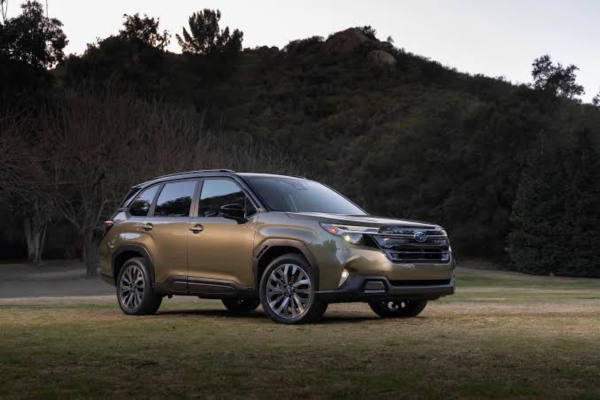
This strategic shift positions Subaru alongside a growing number of automakers that are restructuring their powertrain offerings in response to evolving regulatory environments, shifting consumer demand, and the industry’s broader push toward reduced emissions. The decision to go hybrid-only with the Forester is not merely a product update — it represents a fundamental repositioning of one of the brand’s most important global nameplates.
Why the Forester Was Chosen to Lead the Charge
The Forester has long been one of Subaru’s best-selling models, particularly in markets like North America, Australia, and parts of Asia. Its loyal customer base, known for valuing reliability, all-wheel-drive capability, and practicality, makes it an ideal candidate to introduce hybrid technology at scale. By applying the hybrid-only strategy to such a high-volume model, Subaru ensures that the transition reaches as many drivers as possible in a single move.
The new generation is expected to build on Subaru’s existing experience with its e-Boxer mild hybrid system, though the company appears to be aiming for a more capable and refined electrified setup that delivers tangible improvements in both fuel efficiency and driving performance. While specific technical figures have not yet been confirmed, the direction strongly suggests enhanced electric assist capabilities and a smoother integration between combustion and electric power delivery.
Maintaining the Forester’s Core Identity
Despite the powertrain transformation, Subaru has indicated that the new Forester will retain the qualities that have defined the model across generations. Symmetrical all-wheel drive — a cornerstone of the Subaru brand — will remain central to the vehicle’s design. Ground clearance, interior practicality, and the model’s reputation for confident off-road capability are also expected to carry forward into the new generation.
This approach reflects an important balance that legacy automakers must strike: embracing electrification without alienating established customer bases. Subaru’s existing buyers tend to prioritize function over trend, and the brand’s ability to present the hybrid transition as a performance and efficiency enhancement — rather than a compromise — will be critical to its success in the market.
A Broader Signal for the Subaru Lineup
The Forester’s hybrid-only direction could serve as a template for other models in the Subaru portfolio. As governments across major automotive markets continue to tighten emissions regulations and set timelines for the phase-out of combustion-only vehicles, manufacturers are under increasing pressure to accelerate electrification timelines. Subaru, which has historically been more conservative in its adoption of new powertrain technologies compared to some rivals, appears to be signaling a more aggressive posture going forward.
The brand’s partnership with Toyota — which has been instrumental in the development of hybrid and electric platforms — may also play a growing role in how Subaru approaches future electrification across its range. Leveraging shared technology while maintaining its distinct engineering identity will likely define Subaru’s path in the years ahead.
What This Means for Consumers
For prospective buyers, the shift to a hybrid-only Forester brings both opportunity and adjustment. On the positive side, hybrid powertrains generally offer improved fuel economy in everyday driving conditions, particularly in urban and mixed-use environments. Lower running costs and reduced emissions are tangible benefits that increasingly resonate with car buyers.
At the same time, some consumers in markets with limited charging infrastructure or those seeking the simplicity of a traditional combustion engine may need time to adapt to this new reality. Subaru’s challenge will be to communicate the value of the hybrid system clearly and convincingly across diverse markets with varying levels of electrification readiness.
A Defining Moment for an Iconic Nameplate
The next-generation Forester represents more than just a model update. It marks a defining chapter in Subaru’s evolution as a brand navigating the complexities of a rapidly changing automotive landscape. By committing fully to a hybrid powertrain strategy on one of its most recognized vehicles, Subaru is making a statement about where it stands — and where it intends to go.