Volkswagen has opened pre-orders for the ID. Polo GTI, the first fully electric production model to carry the GTI badge. Priced from €39,995, the compact performance EV produces 166 kW, or 226 PS, and offers up to 424 kilometers of range under the WLTP procedure.
The model arrives 50 years after the original Golf GTI established the basic formula of combining an accessible compact car with stronger performance, sharper handling and distinctive styling.
Volkswagen is now attempting to transfer that formula into the electric era without turning the GTI into an oversized or excessively expensive performance vehicle.
The first production GTI without a combustion engine
The ID. Polo GTI uses a single electric motor driving the front wheels, maintaining the front-wheel-drive configuration traditionally associated with Volkswagen’s smaller GTI models.
The motor produces 166 kW and 290 Nm of torque. Because an electric motor can deliver maximum torque immediately, the response should feel different from that of a turbocharged gasoline engine that needs time to build boost and engine speed.
Volkswagen claims the ID. Polo GTI accelerates from zero to 100 km/h in 6.8 seconds. Its maximum speed is electronically limited to 190 km/h.
The top-speed decision was reportedly influenced by customer feedback. Although some performance EVs emphasize extremely high maximum speeds, Volkswagen has focused on a figure more appropriate for a compact road car while protecting efficiency and battery use.
The result is not intended to be the quickest electric vehicle available. Instead, it aims to provide the balance of accessible performance, everyday usability and recognizable character that has historically defined a GTI.
Chassis technology designed to preserve GTI handling
Electric power alone does not make a car a GTI. Volkswagen has therefore equipped the model with several chassis systems intended to improve its behavior during acceleration and cornering.
An electronically controlled front-axle differential lock manages how power is distributed between the two front wheels. When the car accelerates out of a curve, the system can direct torque more effectively and reduce unnecessary wheelspin.
Progressive steering and an adaptive DCC sports suspension are also standard. The steering ratio changes according to the steering angle, while the adjustable dampers allow the suspension to respond to different road surfaces and driving modes.
The driver can activate a dedicated GTI profile using a button on the sports steering wheel. This setting modifies the response of the electric motor, steering and suspension.
It also activates a specially developed GTI sound and changes the colors and graphics displayed inside the cabin. These elements are intended to give the electric car more personality, although drivers who prefer a quieter experience may be more interested in its immediate torque and chassis response.
A 52-kWh battery and 424 kilometers of range
The ID. Polo GTI uses a battery with 52 kWh of usable capacity. Volkswagen estimates a maximum WLTP range of 424 kilometers, depending on equipment and operating conditions.
Official energy consumption is listed between 14.2 and 15.7 kWh per 100 kilometers. Those figures indicate that the car is designed to remain relatively efficient despite its performance-oriented setup.
Actual range will change with temperature, speed, driving style, wheel and tire selection, cabin heating and the frequency with which the full performance is used.
A driver traveling calmly through urban and suburban areas may approach the official estimate. Frequent highway use or repeated hard acceleration will consume energy more quickly.
The navigation system includes an electric route planner that can automatically add charging stops to longer journeys. It considers the route and available charging infrastructure, reducing the need for the driver to calculate every stop manually.
Charging from 10 to 80 percent in 24 minutes
Maximum DC charging power is 105 kW. Volkswagen says the battery can move from 10 to 80 percent in approximately 24 minutes due to a charging curve designed to maintain useful power through a large portion of the session.
The peak figure is lower than the charging rates offered by some larger and more expensive EVs. However, the ID. Polo GTI also has a comparatively compact battery, so it does not need the same maximum output to complete a reasonably short charging stop.
As with every electric vehicle, the advertised time assumes suitable conditions. Battery temperature, charger performance, weather and the initial state of charge can affect the result.
For routine use, many owners will charge overnight at home or during longer parking periods. DC charging becomes more relevant during road trips or on days when the car covers an unusually high distance.
Traditional GTI details receive an electric interpretation
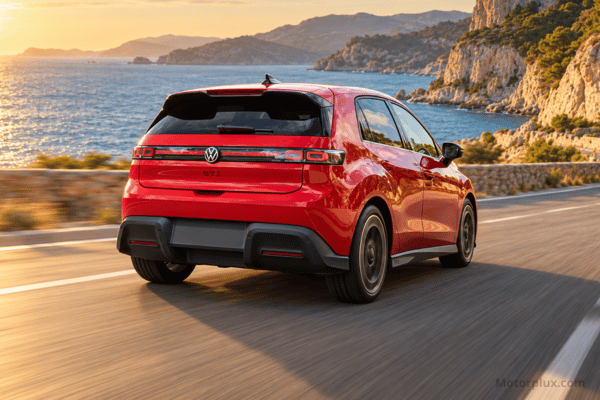
Volkswagen has retained several visual elements associated with earlier GTI models. The front features a red accent line and a honeycomb pattern, while the body rides on standard 19-inch alloy wheels.
IQ.LIGHT LED matrix headlights, illuminated Volkswagen emblems and a split roof spoiler give the electric model a more modern appearance. GTI lettering appears at the front, rear and along the side sills.
Inside, the sports steering wheel includes a red marker at the 12 o’clock position. Red stitching and heavily bolstered front seats reinforce the performance theme.
The upholstery reinterprets the check pattern used by previous generations of the GTI. This is a small detail, but it helps create continuity between the electric car and its gasoline-powered predecessors.
Volkswagen has avoided treating the GTI badge as a simple exterior package. The suspension, steering, differential and driving profile provide functional changes alongside the visual modifications.
A digital cabin with references to the past
The dashboard combines a 10.25-inch Digital Cockpit with a central 12.9-inch infotainment display. Both screens sit on a common horizontal line to keep the main information within the driver’s field of view.
One of the more unusual features is an optional retro instrument display inspired by the gauges of the original Golf GTI. The media interface can also represent the current song as a cassette, referencing the audio technology of the 1980s.
These features do not affect performance, but they demonstrate how Volkswagen is using software to connect the ID. Polo GTI with earlier periods of the badge’s history.
Modern connectivity and driver-assistance features remain available. The optional Connected Travel Assist can support steering, acceleration and braking within its operating limits.
Volkswagen says the newest version can recognize red traffic lights and bring the car to a stop. It remains a driver-assistance system rather than autonomous technology, so the person behind the wheel must remain attentive and responsible.
More luggage space than the gasoline Polo GTI
The compact electric components and dedicated architecture give the ID. Polo GTI more interior and cargo space than the combustion-powered Polo GTI.
Cargo capacity increases from 351 liters in the gasoline model to 441 liters in the electric version. Folding the rear seatbacks expands the available volume to as much as 1,240 liters.
That makes the car more practical for grocery shopping, luggage and everyday family use. A detachable tow bar will also be available as an option.
The tow bar has a maximum vertical load of 75 kilograms, allowing it to support a suitable carrier for two electric bicycles. This adds another practical function that is not always available on compact performance cars.
Optional equipment includes a panoramic glass roof, electrically adjustable 12-way front seats with pneumatic massage and a 425-watt Harman Kardon audio system.
Volkswagen will also offer a specially developed premium 19-inch tire for buyers who want to prioritize handling performance.
The price positions it below many performance EVs
The €39,995 starting price places the ID. Polo GTI above ordinary compact electric cars but below many premium electric performance models.
Market-specific taxes, equipment and incentives will determine the final cost outside Germany. Volkswagen has not confirmed identical pricing or availability for every region.
The price is particularly important because the original GTI became successful by making performance accessible to a larger group of buyers. An electric GTI that becomes too expensive would risk moving away from that identity.
At the same time, the ID. Polo GTI includes adaptive suspension, matrix lighting, 19-inch wheels and performance-focused chassis technology as standard. Buyers will need to consider the complete equipment package rather than compare only its headline price with a basic compact EV.
Can an electric car feel like a true GTI?
The central question is not whether the ID. Polo GTI is fast enough. A zero-to-100-km/h time of 6.8 seconds gives it credible hot-hatch performance, even if many dual-motor EVs are quicker in a straight line.
The bigger test will involve steering feedback, body control, braking consistency and how the front-wheel-drive system manages its immediate torque.
GTI models have traditionally succeeded because they remain comfortable and practical during normal use while becoming enjoyable on a winding road. Volkswagen’s adaptive suspension, progressive steering and electronically controlled differential suggest it understands that requirement.
The 424-kilometer WLTP range and 441-liter luggage compartment also support its everyday role. Those figures make the ID. Polo GTI more than a short-range performance experiment.
By combining recognizable GTI details with a modern electric platform, Volkswagen is attempting to carry one of its most important performance identities into a new era.
The specification appears promising: 226 PS, responsive front-wheel drive, usable range and a price below €40,000. Whether it captures the personality of the best GTI models will become clearer once independent road tests begin.