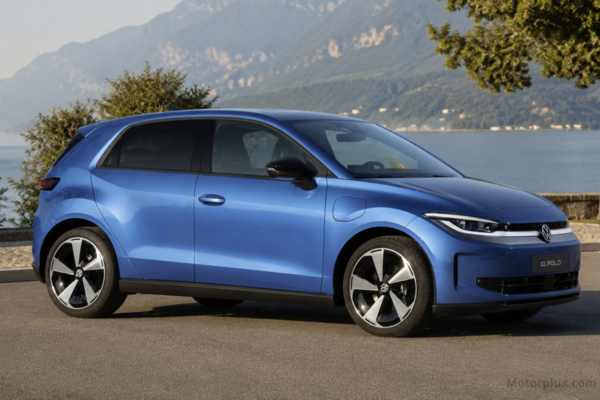
Volkswagen has officially unveiled the ID.2, a compact electric vehicle positioned as the brand’s most accessible entry into the electric mobility segment. With a starting price set below the €25,000 threshold, the ID.2 represents a decisive move by the German automaker to bring electric driving within reach of a broader European audience.
The announcement marks a significant milestone not only for Volkswagen but for the wider automotive industry, as affordability has long been cited as one of the primary barriers preventing mainstream consumers from transitioning to electric vehicles.
A Strategic Answer to Market Demand
For years, critics and consumers alike have pointed out that electric vehicles remained largely confined to premium price brackets, accessible only to higher-income buyers or early adopters willing to pay a premium for new technology. The ID.2 is Volkswagen’s clearest response to that challenge.
By targeting a sub-€25,000 price point, Volkswagen positions the ID.2 directly against popular internal combustion engine models in the compact and supermini segments — vehicles that have historically dominated European sales charts. The strategy suggests that Volkswagen is not simply adding another EV to its lineup, but is actively competing for the heart of the mass market.
This approach also aligns with broader European Union goals to accelerate the electrification of personal transport, as regulators continue to push toward stricter emissions standards across the continent.
What the ID.2 Brings to the Table
The ID.2 builds on the design language established by previous models in the ID. family while adopting a more compact footprint suited to urban environments and everyday commuting. Its proportions are designed to appeal to city dwellers and families looking for a practical, efficient, and modern electric vehicle without the financial commitment associated with larger models such as the ID.4 or ID.7.
While full technical specifications will continue to be detailed through official channels, the vehicle is expected to deliver a competitive driving range, fast-charging capability, and a well-equipped interior that meets the expectations of today’s connected car buyer.
Volkswagen has consistently emphasized that affordability does not mean compromise in this case — a narrative the brand will need to reinforce as the ID.2 moves toward broader public availability.
Implications for the European EV Landscape
The arrival of the ID.2 at this price level could reshape competitive dynamics across the European electric vehicle market. Rivals in the compact EV space will face increased pressure to match both the pricing and brand recognition that Volkswagen brings to the segment.
Additionally, the launch sends a clear signal to Chinese electric vehicle manufacturers — several of which have been actively expanding into European markets with competitively priced offerings — that established European brands are prepared to compete on value, not just heritage.
Analysts and industry observers will be watching closely to see whether the ID.2 can achieve the kind of volume sales necessary to make its development economically meaningful, and whether its entry price can be sustained once production scales up.
A Defining Moment for Volkswagen’s EV Ambitions
The ID.2 launch is more than a product announcement — it is a statement about where Volkswagen intends to position itself in the electric future. By committing to a sub-€25,000 starting price on a mainstream model, the automaker is doubling down on the belief that electrification must be democratic to succeed.
Whether the ID.2 becomes the turning point that accelerates EV adoption among everyday European drivers remains to be seen. What is clear is that Volkswagen is making its intentions known, and the broader industry will be taking note.