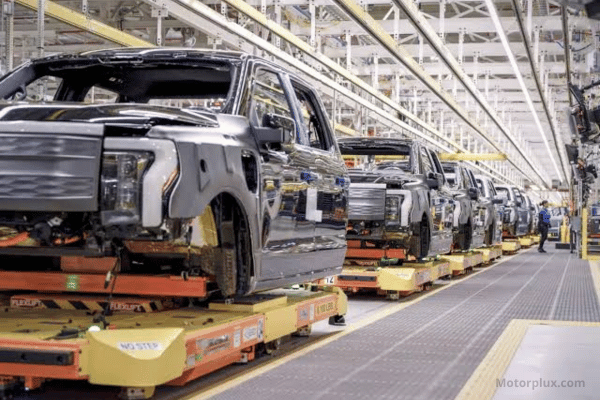
Ford has stopped building its best-selling F-150 pickup at its Dearborn Truck Plant in Michigan and canceled multiple shifts at its Kansas City Assembly Plant in Missouri, idling thousands of workers as the automaker works through a supplier-related parts shortage that, more than a week in, it still hasn’t publicly explained.
A shutdown that keeps extending
According to an internal memo viewed by Reuters, all production crews and shifts at Dearborn were paused starting Thursday, September 24, with the plant expected to remain down through September 30 — nearly a full week without building a single F-150. Mark DePaoli, UAW Region 1A director and former vice president of UAW Local 600, which represents Dearborn’s hourly workforce, told the Detroit Free Press the shutdown was tied partly to needed facility repairs in addition to the underlying supplier issue. The disruption isn’t limited to Dearborn: Ford also canceled an F-150 shift at its Kansas City Assembly Plant in Claycomo, Missouri, on September 25, with additional shifts affected in the days since — the plant has reportedly canceled 15 F-150 shifts total since September 1, even as Transit van production there has continued uninterrupted.
Together, the two plants’ disruptions have left roughly 3,500 to 4,000 workers idle, based on figures cited in the internal memo.
What Ford isn’t saying
Despite the scale of the disruption, Ford has been notably tight-lipped about its cause. When asked directly by the Detroit Free Press why production was being halted, Ford spokesman Dave Tovar said simply, “We don’t comment on supplier disruptions.” Reuters reported it was unable to determine which specific supplier is at the center of the issue. A person familiar with the matter told Reuters the parts shortage is entirely unrelated to a fire at aluminum supplier Novelis’ Oswego, New York plant last year, which had previously disrupted Ford’s F-150 supply chain — early speculation had pointed toward a new aluminum-related issue, but sources have said that isn’t the case this time.
That lack of clarity has left plenty of room for uncertainty about scope and duration. Ford analyst Sam Fisher noted the company had intended to build about 67,200 model-year 2026 F-150s through the end of the year, but no source has indicated how many vehicles Ford will ultimately lose to the current disruption, or whether F-150 availability at dealers will tighten if the interruptions continue past this week.
Other plants are picking up the slack
Not every part of Ford’s truck manufacturing network has been affected. The company’s Kentucky Truck Plant near Louisville, which builds the heavy-duty F-250 Super Duty, has reportedly increased its own production to help offset the shortfall from Dearborn and Kansas City — though it obviously can’t replace lost F-150 volume directly, since the two trucks are built on different platforms with different parts. Fisher said he was unaware of any disruption at the Kentucky facility itself.
The stakes for Ford’s most important vehicle
It’s hard to overstate how much weight the F-150 carries for Ford’s overall business. The F-Series has been the best-selling vehicle line in the US for decades and represents a disproportionate share of Ford’s profitability, meaning even a week-long production gap creates real financial strain for the company — a cost that compounds the longer the shortage remains unresolved and unexplained. The timing is also notable: the disruption comes as analysts are already predicting a slowdown in third-quarter 2026 sales for Detroit automakers generally, with Ford expected to post weaker results than the same period in 2025.
A pattern that keeps recurring
This isn’t the first time Ford’s F-150 production has been derailed by a supplier problem outside its direct control. A 2025 fire at Novelis’ Oswego aluminum plant previously disrupted supply to Ford, its largest customer, and the company has struggled at various points since to fully catch up on lost F-150 volume from that incident. The current shortage’s precise cause remains undisclosed, but the recurring pattern — a single supplier problem rippling into a week-plus production halt at Ford’s flagship product — underscores how exposed even a well-established, high-volume vehicle program remains to disruptions anywhere in its supply chain.
What it means going forward
For now, the practical impact is limited to lost production time and idled workers, without a confirmed effect on dealer inventory or pricing. But if the underlying supplier issue isn’t resolved quickly once the current shutdown period ends, the ripple effects could reach further — tighter F-150 availability at dealerships, pressure on Ford’s already-softening 2026 sales trajectory, and renewed scrutiny of how resilient the company’s supply chain really is for the vehicle it can least afford to lose.