Few forces reshape the automotive industry as profoundly as government regulation. In the United States, federal emission standards have long served as a benchmark that drives investment decisions, product planning, and technological development across the entire sector. As those standards continue to shift — tightening in some areas, being reconsidered in others — automakers are finding themselves in a constant state of strategic recalibration.
The challenge is not simply compliance. It is anticipating where the regulatory environment will land years from now, and positioning a company’s product lineup, manufacturing infrastructure, and supply chain accordingly. For major U.S. automakers, this has become one of the most consequential planning exercises in recent memory.
Accelerating the Push Toward Electrification
One of the clearest responses to tightening emission targets has been an accelerated commitment to electric vehicles. Across the board, American manufacturers have expanded their EV portfolios, announced new battery production facilities, and formed strategic partnerships to secure the critical minerals needed for large-scale electrification.
This is not purely regulatory compliance — it is also a competitive signal. Automakers that invest early in clean propulsion technology position themselves more favorably in global markets where emission rules tend to be even stricter. The U.S. regulatory environment, while sometimes unpredictable, has consistently pointed toward a lower-emission future, and most manufacturers are treating that trajectory as a durable trend rather than a temporary policy cycle.
Hybrid Technology as a Bridge Strategy
Not every automaker is betting exclusively on battery-electric vehicles. For many, plug-in hybrid and traditional hybrid technology represents a practical bridge — a way to reduce fleet-wide emissions meaningfully without requiring the full infrastructure overhaul that a purely electric transition demands.
This approach allows manufacturers to meet near-term compliance targets while continuing to offer vehicles that consumers are already comfortable with. It also provides flexibility in the event that federal standards are revised or implementation timelines are extended, a scenario that has occurred before and cannot be entirely ruled out.
Investment in Manufacturing and Supply Chains
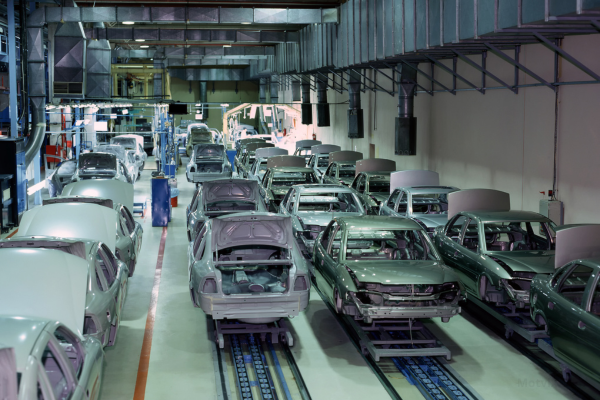
Responding to emission standards is not only a matter of what vehicles automakers build — it also concerns how and where they build them. Cleaner manufacturing processes, domestically sourced battery components, and investments in renewable energy for factory operations are all part of how companies are aligning their broader operations with evolving regulatory expectations.
These decisions carry long-term financial weight. Retooling assembly plants, restructuring supplier relationships, and training workforces for new production methods require significant capital. Automakers are making these investments with the understanding that the regulatory direction, regardless of short-term political shifts, is unlikely to reverse course entirely.
Navigating Policy Uncertainty
Perhaps the most difficult aspect of the current environment is the degree of uncertainty surrounding federal policy. Emission standards have been subject to revision across administrations, creating planning challenges for an industry that operates on multi-year product development cycles.
In response, many automakers have adopted a dual-track approach: designing vehicles that can comply with the most demanding regulatory scenarios while also maintaining sufficient flexibility to adapt if standards are loosened. This kind of scenario planning has become a standard tool in automotive strategy departments.
Looking Ahead
The relationship between U.S. automakers and federal emission standards is fundamentally dynamic. Manufacturers are not passive recipients of regulation — they engage actively with policymakers, shape industry coalitions, and invest in technologies that influence what future standards will look like.
What is clear is that the era of treating emission compliance as an afterthought has passed. For American automakers, sustainability strategy and business strategy have become one and the same. How well they navigate the shifting regulatory terrain in the coming years will go a long way toward determining their competitive standing both at home and in global markets.