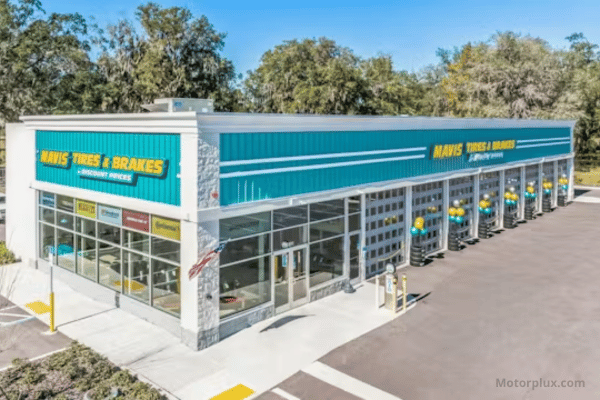
The US auto service industry just got a lot more consolidated. Mavis Tire Express Services Corp. has officially closed its $700 million cash acquisition of Pep Boys – Manny, Moe & Jack, bringing nearly 800 additional service centers under Mavis’s umbrella and pushing its combined network past 4,400 locations across the United States and Canada.
A deal that took a month to close
The acquisition moved relatively quickly by industry standards. Mavis and Icahn Enterprises, Pep Boys’ parent company, announced the definitive agreement on July 21, 2026, and the transaction officially closed on August 20 — about a month later, once customary closing conditions and regulatory approvals were satisfied. Under the terms of the deal, a Mavis subsidiary acquired Pep Boys’ auto-service and tire business outright, while Icahn Enterprises retained the real estate underneath Pep Boys’ stores as well as two other automotive brands, AAMCO Transmissions and Precision Tune Auto Care, that had also been under its umbrella.
That structure matters for understanding exactly what changed hands. This wasn’t simply Mavis buying real estate and rebranding storefronts; it was an operating-business acquisition, meaning Mavis now runs the day-to-day tire and service operations at those locations while Icahn continues to own the underlying properties.
Pep Boys keeps its name — for now
Despite the change in ownership, Pep Boys isn’t disappearing from strip malls and shopping centers across the country. The companies have disclosed no plans to rebrand the nearly 800 Pep Boys locations, meaning customers walking into a Pep Boys store today will still see the same signage and same brand they’ve known for decades — just reporting up to a different corporate parent behind the scenes. Founded in Philadelphia in 1921, Pep Boys has built more than a century of brand recognition, and Mavis appears to be betting that keeping the name intact preserves value that a rebrand could otherwise erode.
Why Mavis wanted Pep Boys specifically
Geography was a major driver behind the deal. Pep Boys has historically maintained a particularly strong presence across the Western United States, a region where Mavis — which has built its network largely through acquisitions and organic growth concentrated in the East and South — had comparatively less density. “Pep Boys brings a loyal customer base, deep-rooted market presence across the United States, and a distribution network that will meaningfully enhance our supply chain nationwide,” said David Sorbaro, Mavis’s co-chief executive officer, in a statement announcing the deal.
That distribution angle is worth noting on its own. Beyond the retail storefronts themselves, Pep Boys operates a parts distribution network that Mavis executives have said will help strengthen the combined company’s supply chain — a meaningful consideration at a time when parts availability and pricing have been under pressure industry-wide.
Part of a broader wave of consolidation
The Pep Boys deal is the latest in a rapid run of acquisitions for Mavis, which has spent the past couple of years assembling one of the largest independent auto service networks in North America. In 2025, the company completed its purchase of Midas from TBC Corp., a deal that alone brought Mavis’s network to roughly 3,500 US and Canadian locations, including nearly 1,300 franchised stores. Mavis has continued growing organically on top of those acquisitions, opening new locations in regions like the Carolinas as part of a stated strategy to build denser regional coverage. With Pep Boys now added to a portfolio that already includes brands like Midas, Tire Kingdom, NTB, Town Fair Tire, Brakes Plus and Tuffy, Mavis has built a genuinely national footprint under a single corporate parent, even as most of its individual storefronts retain their original branding.
The broader automotive aftermarket has been consolidating right alongside Mavis’s own growth. Just weeks before the Pep Boys deal was announced, a separate transaction saw Big Brand Tire & Service strike its own acquisition agreement, part of a wider pattern of independent tire and service chains combining forces or getting absorbed by larger platforms.
What it means for drivers
For most Pep Boys customers, the day-to-day experience of getting an oil change, new tires, or a repair likely won’t change immediately — the storefront, the staff, and the brand name are staying the same for now. The bigger, longer-term question is what happens as Mavis integrates Pep Boys’ operations into its broader network: whether pricing, service menus, or parts sourcing shift over time as the two companies’ systems and supply chains merge. With auto repair costs already a significant pain point for many drivers in 2026, how a newly combined, 4,400-location Mavis chooses to price and staff its expanded footprint is likely to be closely watched by consumers and competitors alike in the months ahead.