Renault Group has confirmed its intention to move forward with a public offering for Ampere, its dedicated electric vehicle and software division, in a strategic move that underscores the French automaker’s long-term commitment to electrification. The announcement comes at a pivotal moment for the European automotive industry, where competition in the EV segment is growing more intense by the month.
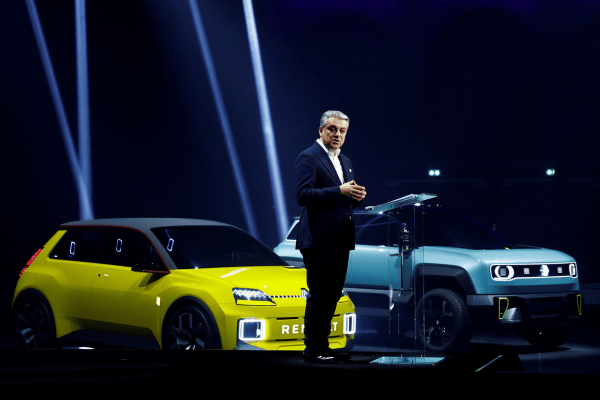
By separating Ampere from its broader corporate structure and positioning it as an independent entity on public markets, Renault aims to unlock new sources of capital, attract specialized investors, and sharpen its competitive focus in a sector that demands both agility and significant financial resources.
What Ampere Represents for Renault’s Strategy
Ampere is not simply a rebrand or a holding structure — it represents a fundamental shift in how Renault approaches product development, engineering, and technology integration. The division has been built around software-defined vehicles, next-generation electric platforms, and a leaner, more efficient manufacturing philosophy.
By taking Ampere public, Renault signals confidence in the unit’s standalone value proposition. The move is designed to attract investors who are specifically interested in the electric and connected vehicle space, rather than those evaluating a traditional, diversified automaker. This distinction matters in a market where capital is increasingly flowing toward pure-play EV and tech-adjacent companies.
A Crowded and Rapidly Evolving Market
The timing of this decision is far from coincidental. Across Europe, competition in the electric vehicle segment is accelerating on multiple fronts. Legacy manufacturers such as Volkswagen, Stellantis, and BMW are expanding their EV portfolios, while Asian manufacturers — particularly from China — are entering European markets with competitively priced electric models that are challenging established players.
At the same time, regulatory pressure continues to mount. The European Union’s framework for phasing out internal combustion engine vehicles by mid-decade is pushing manufacturers to invest heavily in electrification, regardless of short-term market conditions. For Renault, moving Ampere toward an IPO is both an offensive and defensive strategy — a way to fund its transition while demonstrating to stakeholders that its electric future has a credible, self-sustaining structure.
Investor Confidence and Market Readiness
The decision to pursue a public listing will inevitably face scrutiny from financial markets. Investor appetite for EV-focused companies has been more cautious in recent years compared to the peak enthusiasm seen earlier this decade, as profitability timelines have proven more complex than initially anticipated across the industry.
Renault will need to present a compelling narrative around Ampere’s path to profitability, its technology differentiation, and its ability to compete not just on product quality but on software capability — an increasingly critical battleground in modern vehicle development. Partnerships, technology licensing opportunities, and supply chain resilience will all factor into how markets assess the unit’s value.
A Defining Moment for European Automotive Leadership
Beyond Renault’s corporate strategy, the Ampere IPO carries broader symbolic weight for the European automotive sector. As the region works to assert itself as a credible center of EV innovation — rather than ceding ground to American and Chinese competitors — moves like this one signal that European manufacturers are willing to restructure at a fundamental level to remain competitive.
Whether Ampere’s listing ultimately succeeds in attracting the investment and market confidence Renault is seeking will depend on execution, timing, and the broader macroeconomic environment. But the commitment itself sends a clear message: Renault is not stepping back from its electric ambitions. It is doubling down, and it is asking the market to come along for the ride.