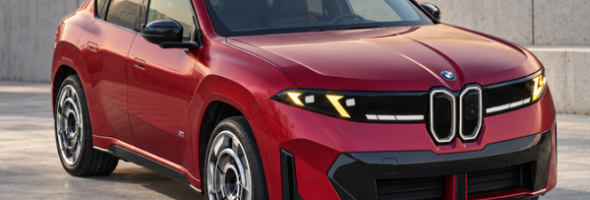
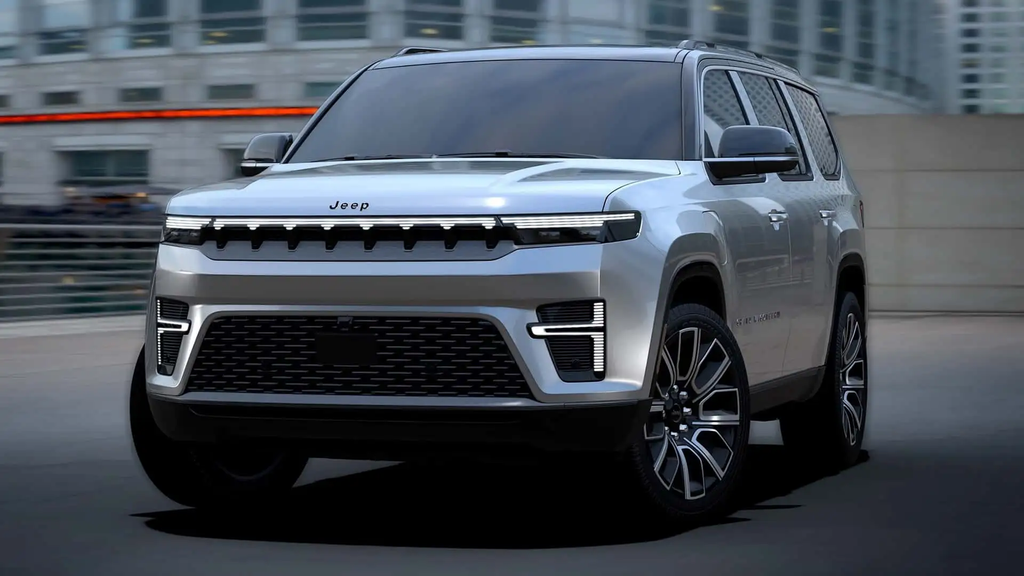
Stellantis’s most ambitious electrified vehicles in years are facing fresh delays. According to a supplier memo reviewed by Automotive News, production of the Jeep Grand Wagoneer EREV has slipped roughly six months to November 2026, while the Ram 1500 REV — Stellantis’s range-extended electric pickup — has been pushed back by about nine months, now targeting mid-April 2027 instead of the mid-2026 window originally promised.
Two trucks, one shared problem
The Grand Wagoneer EREV and Ram 1500 REV aren’t just sister programs in name — they share core electric hardware, including a 400-volt battery and electric motor architecture, along with a 3.6-liter Pentastar V6 that acts purely as a generator in both vehicles rather than directly driving the wheels. That shared foundation appears to be exactly where the trouble lies. Because both trucks depend on the same underlying electric hardware, a setback affecting one program tends to ripple directly into the other’s timeline as well, which helps explain why both vehicles have slipped in the same reporting cycle rather than just one.
Neither delay came through a formal public announcement from Stellantis. Instead, the revised timing surfaced through supplier memos and sourcing cited by Automotive News — and notably, Ram’s own consumer-facing website was still listing a late-2026 availability window for the 1500 REV as recently as this month, meaning the company’s public messaging hadn’t yet caught up with the internal production schedule by the time the delay became public.
A badge that’s already been through one identity crisis
The Ram 1500 REV’s naming history adds a layer of complexity to an already confusing situation for shoppers trying to track the truck’s progress. Ram originally applied the “REV” name to a planned all-electric pickup — a genuine battery-electric truck with no gasoline engine at all. That version was ultimately canceled, and Stellantis CEO Antonio Filosa said at the time that Ram had “a much more comprehensive product range” coming instead, centered on the extended-range vehicle that had originally been announced under the name Ramcharger. The REV badge was then reassigned to that range-extended model, which is the version now facing the nine-month delay. To add one more wrinkle, the Ramcharger name itself hasn’t disappeared — it’s reportedly being held in reserve for a future full-size SUV based on the Grand Wagoneer that will also use a range-extended powertrain.
What buyers actually get, once it arrives
Despite the delays, the underlying technology both vehicles are built around remains a genuinely compelling pitch for buyers who like the idea of electric driving but worry about long trips and charging availability. In a range-extended setup, electric motors handle all propulsion, while the gasoline engine runs purely as an onboard generator to keep the battery charged — it never mechanically connects to the wheels. That arrangement lets drivers do most everyday driving on electric power alone while retaining the reassurance of a full tank of gas for longer trips, without needing to plan a route around charging stops. Reported specifications for the segment point to serious capability once these trucks do arrive: Jeep has said the Grand Wagoneer EREV will deliver an estimated 647 horsepower and 620 lb-ft of torque, good for a 0-to-60-mph time around five seconds — genuinely muscular numbers for a full-size SUV, extended-range powertrain or not.
Part of a broader retreat from pure EVs
These delays land within a larger pattern at Stellantis, which has walked back several battery-electric vehicle programs over the past couple of years in favor of the extended-range approach now embodied by both the Grand Wagoneer EREV and Ram 1500 REV. Range-extended electric vehicles have become increasingly common among Chinese automakers in particular, and Stellantis is betting that the format — genuine electric driving for daily use, without the range anxiety of a pure EV — will resonate more with American truck and SUV buyers than a fully electric alternative would right now. Stellantis isn’t alone in exploring that direction, either; Ford has reportedly been considering an extended-range successor to its F-150 Lightning as it reassesses its own electric truck strategy.
Why the timeline matters
Stellantis has invested real money preparing for this shift, including more than $406 million announced across three Michigan-based production facilities — among them the Sterling Heights and Warren plants tied to these two vehicles — back in September 2024. With the Grand Wagoneer EREV and Ram 1500 REV positioned as proof that Stellantis still has a credible electrification strategy after canceling several pure-EV programs, further delays raise the stakes on getting these two trucks right. Every additional month of delay is also a month competitors’ own electric and range-extended pickups get to establish themselves first — a real, non-trivial cost in a segment where first-mover advantage and dealer floor space both matter.