Stellantis, one of the world’s largest automotive conglomerates, has announced a temporary halt to production at three of its European manufacturing plants. The decision is part of a wider restructuring initiative the company has been advancing in recent months, aimed at improving operational efficiency and adapting to an increasingly competitive and rapidly evolving global market.
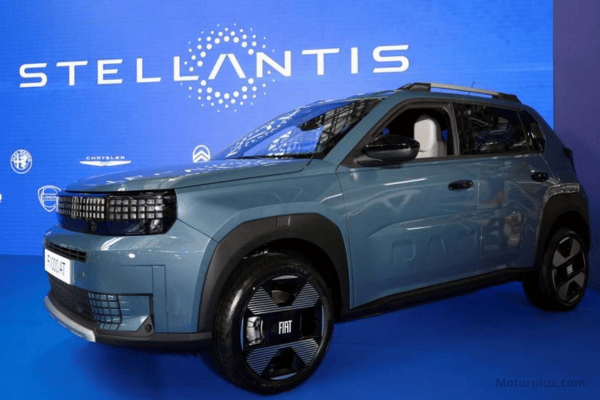
The move reflects the mounting pressure that major automakers face as they navigate a complex transition period — one defined by shifting consumer demand, the accelerating push toward electrification, and the persistent challenge of managing legacy manufacturing infrastructure built around internal combustion engines.
Why the Production Pause Matters
While temporary production stoppages are not uncommon in the automotive industry, the scale and timing of Stellantis’s decision carry significant weight. Halting operations at three facilities simultaneously signals more than a routine inventory adjustment. It points to a deliberate effort by the group’s leadership to realign its European footprint with the company’s long-term business objectives.
Analysts have noted that Stellantis has been under pressure to streamline its vast portfolio of brands — which includes Jeep, Peugeot, Citroën, Fiat, Opel, and others — while simultaneously accelerating investment in electric vehicle platforms. Maintaining profitability across such a diverse range of nameplates, particularly in markets where demand has softened, requires difficult and often unpopular decisions.
The affected plants represent a cross-section of the group’s European industrial presence, and the pause is expected to have a direct impact on local employment, supplier networks, and regional economies that have historically depended on automotive manufacturing as a cornerstone industry.
A Broader Restructuring Agenda
This production halt does not stand in isolation. It is part of a broader restructuring agenda that Stellantis has been signaling to investors and stakeholders for some time. The company has been openly evaluating which models, markets, and manufacturing sites align best with its evolving global strategy — and which may no longer justify continued investment at current levels.
Cost reduction, workforce reorganization, and platform consolidation are among the key pillars of this strategy. By concentrating production on higher-margin vehicles and shared electric platforms, Stellantis aims to improve its overall financial resilience while positioning itself competitively for the decade ahead.
The European market, in particular, presents unique challenges. Regulatory requirements around emissions and electrification timelines have intensified, while consumer adoption of electric vehicles has grown more slowly than many manufacturers anticipated. This gap between policy ambition and market reality has forced several automakers — Stellantis included — to recalibrate their short-term production plans.
Industry Implications
Stellantis’s decision is likely to reverberate across the European automotive ecosystem. Suppliers, logistics partners, and regional governments will be watching closely to understand the full scope of the restructuring and what it means for the long-term viability of each affected site.
Labor unions and worker representatives have already expressed concern over the potential consequences for jobs and community stability. Negotiations between management and union bodies are expected to intensify as the company defines the next steps in its restructuring roadmap.
From a broader industry perspective, the move serves as a reminder that the transition to electrification is not a smooth or linear process. Even the largest automotive groups face real structural friction as they attempt to reshape decades-old industrial models into something fit for a rapidly changing future.
Looking Ahead
The coming months will be critical for Stellantis as it works to communicate a clear and credible path forward to its workforce, investors, and customers. The success of its restructuring effort will depend not only on the difficult decisions being made today, but on the company’s ability to execute a coherent long-term vision in an environment that leaves little room for error.
For the European automotive industry as a whole, the story of Stellantis serves as a telling indicator of the turbulent transformation still underway — one that is reshaping not just individual companies, but the industrial identity of entire regions.