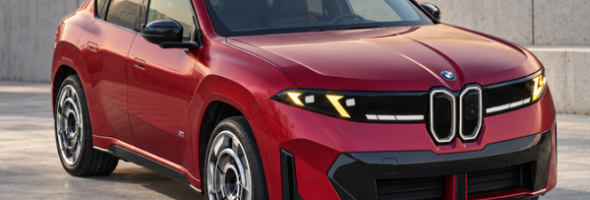
Toyota and BMW have announced a significant deepening of their hydrogen partnership, moving beyond earlier collaboration agreements to pursue joint development of shared hydrogen fuel cell platforms. The move marks one of the most ambitious commitments to hydrogen mobility seen from major automakers in recent years, and it arrives at a moment when the industry is actively debating which clean technologies will define the next generation of transportation.
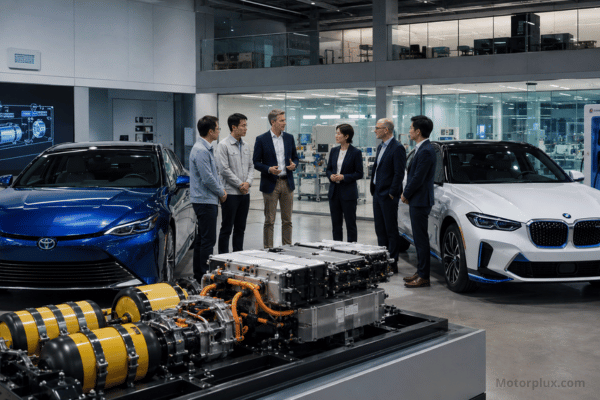
The deal reflects a shared conviction that hydrogen — despite facing persistent infrastructure and cost challenges — remains a viable and necessary complement to battery electric vehicles, particularly in segments where weight, range, and refueling time are critical factors.
A Partnership With Deep Roots
This is not the first time Toyota and BMW have joined forces. The two companies have maintained a technical cooperation relationship for well over a decade, encompassing areas such as sports car development, battery research, and hydrogen technology. However, the new agreement represents a meaningful escalation in scope and ambition.
By committing to a joint platform development framework, both manufacturers are signaling their intent to share engineering resources, reduce redundant research costs, and accelerate the timeline for bringing next-generation hydrogen fuel cell systems to market. Platform sharing of this kind is a well-established strategy in the automotive industry, but applying it specifically to hydrogen powertrain architecture is a notable step forward.
Why Hydrogen, and Why Now?
The timing of the announcement is telling. While the broader market has largely consolidated around battery electric vehicles as the dominant pathway to decarbonization, a growing number of stakeholders — including commercial vehicle manufacturers, energy companies, and certain governments — continue to invest in hydrogen as a long-term solution.
Hydrogen fuel cell vehicles offer several structural advantages that battery EVs currently struggle to match:
- Faster refueling times, comparable to conventional gasoline vehicles
- Greater range potential in heavy-duty and long-haul applications
- Lower weight penalties for large vehicles such as trucks and buses
- Zero direct emissions, with water vapor as the primary byproduct
For Toyota, hydrogen has never been a secondary strategy. The company has consistently positioned fuel cell technology as central to its clean mobility vision, evidenced by its long-running investment in the Mirai sedan and its active participation in commercial hydrogen projects globally. BMW, for its part, has explored hydrogen with models such as the iX5 Hydrogen pilot program, demonstrating genuine technical commitment rather than mere marketing interest.
What a Shared Platform Could Mean
The development of a common hydrogen fuel cell platform could have far-reaching implications — not just for the two companies involved, but for the broader industry. A jointly engineered architecture would theoretically allow both brands to deploy hydrogen powertrains across different vehicle types and segments, spreading development costs and creating economies of scale that have so far been difficult to achieve in hydrogen mobility.
This kind of collaboration also sends a signal to suppliers, infrastructure developers, and policymakers that two major global automakers view hydrogen as a commercially serious proposition worth substantial investment, not a speculative side project.
Challenges Remain Considerable
Despite the optimism embedded in this announcement, the path forward is not without significant obstacles. Hydrogen refueling infrastructure remains sparse in most markets, green hydrogen production at scale is still costly, and consumer awareness of fuel cell vehicles is limited compared to battery EVs.
Neither Toyota nor BMW is expected to resolve these systemic challenges unilaterally. However, by aligning their technical roadmaps, both companies improve their ability to advocate collectively for policy support, infrastructure investment, and industry standardization — all of which are prerequisites for mainstream hydrogen adoption.
A Strategic Bet on the Long Game
The Toyota-BMW hydrogen platform deal is best understood not as a challenge to electric vehicles, but as a parallel strategic investment in a technology that may prove indispensable in specific applications and markets. For two automakers with the resources and technical credibility to make this bet meaningful, the partnership represents a disciplined, long-term commitment to keeping hydrogen as a serious option in the clean mobility equation.
Whether the market ultimately rewards that commitment will depend as much on external factors — energy policy, infrastructure rollout, and green hydrogen economics — as on the quality of the engineering that emerges from this alliance.