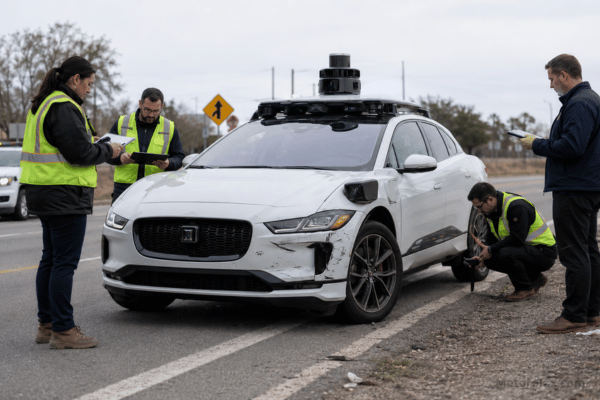
Federal safety regulators in the United States have opened a formal investigation into a series of incidents linked to autonomous and semi-autonomous driving systems, signaling a significant escalation in oversight of one of the automotive industry’s most transformative technologies. The move reflects growing institutional concern about whether existing safety frameworks are adequately equipped to handle the complexities of self-driving vehicles operating on public roads.
What Prompted the Investigation
The probe follows a pattern of reported incidents involving vehicles equipped with varying levels of driving automation. While no single catastrophic event appears to have triggered the inquiry, regulators have indicated that a cumulative review of incident reports, consumer complaints, and field data led authorities to conclude that a structured investigation was warranted.
Autonomous driving systems — which range from advanced driver-assistance features to fully self-driving capabilities — have been under increasing scrutiny as their deployment expands beyond controlled testing environments and into everyday traffic scenarios. The concern among regulators centers not only on individual incidents but also on the systemic reliability of these systems under real-world conditions.
The Regulatory Landscape Under Pressure
The National Highway Traffic Safety Administration (NHTSA), the principal federal body responsible for vehicle safety in the United States, has faced sustained criticism from consumer advocates and independent safety researchers who argue that current regulations have not kept pace with the rapid commercialization of autonomous technology.
Unlike conventional vehicle safety standards — which are built on decades of crash data and engineering benchmarks — autonomous driving systems rely on software algorithms, sensor fusion, and artificial intelligence, all of which present unique challenges for traditional regulatory review. The formal probe represents an effort to close that gap and establish clearer accountability standards for manufacturers and technology developers.
Industry Implications
The investigation carries significant implications for automakers and technology companies actively developing or deploying autonomous driving features. Brands that have positioned self-driving capabilities as a core part of their product strategy may face increased documentation requirements, operational restrictions, or mandatory reporting obligations as the probe progresses.
For the broader industry, the regulatory action serves as a reminder that innovation and oversight must advance in parallel. Companies that have moved aggressively to scale autonomous features risk facing greater friction if their safety data does not withstand formal regulatory scrutiny.
Investors and industry analysts are closely monitoring how manufacturers respond to the investigation, as the outcome could reshape deployment strategies, influence liability frameworks, and accelerate — or delay — the broader adoption of fully autonomous vehicles.
A Defining Moment for Autonomous Technology
Beyond the immediate legal and commercial considerations, this investigation marks a pivotal moment in the public conversation about autonomous driving. Trust — both from regulators and the general public — remains one of the most critical and fragile assets for companies operating in this space.
Transparency in how incidents are reported, analyzed, and addressed will likely become a central expectation going forward. Regulators appear increasingly unwilling to treat autonomous driving as an experimental domain insulated from the same standards applied to conventional vehicles.
Looking Ahead
As the formal probe unfolds, the automotive industry will be watching carefully for any preliminary findings, interim guidance, or regulatory proposals that emerge from the process. The investigation could ultimately lead to new federal standards specifically designed for automated driving systems — a development that many safety advocates have long argued is overdue.
For now, the opening of this inquiry sends a clear message: autonomous driving technology, however promising, must earn its place on public roads through demonstrated safety and rigorous accountability — not through the promise of innovation alone.