The pressure on automakers to bring new vehicles to market faster has never been greater. Consumer expectations are evolving rapidly, regulatory requirements are tightening, and the shift toward electrification demands entirely new engineering approaches. In response, the automotive industry is turning to one of the most transformative tools in modern engineering: the digital twin.
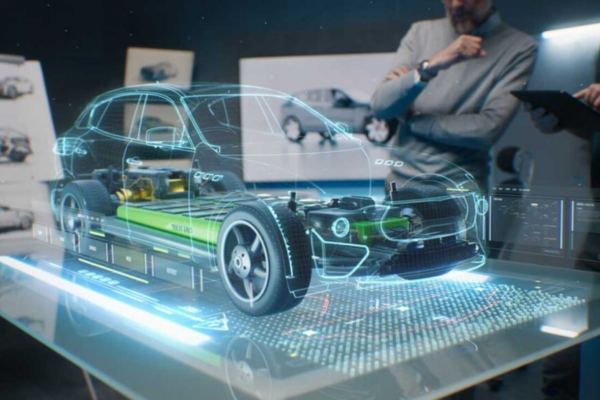
A digital twin is a precise virtual replica of a physical object, system, or process. In vehicle development, this means creating a highly detailed simulation of a car — or any of its components — that mirrors real-world behavior in a controlled digital environment. The implications for development timelines are profound.
Compressing the Development Timeline
Traditionally, vehicle development has followed a lengthy and resource-intensive path. Engineers build physical prototypes, subject them to extensive testing under varied conditions, identify failures, redesign components, and repeat the cycle. This iterative process can span several years and consume substantial capital.
Digital twins fundamentally disrupt this model. By simulating how a vehicle behaves under thousands of real-world scenarios — from extreme temperatures to high-speed braking — engineering teams can identify potential problems early in the design phase, long before a physical prototype is ever built. This shift from reactive problem-solving to proactive design optimization is where the most significant time savings emerge.
Teams no longer need to wait weeks for a physical test result. A virtual simulation can deliver comparable insights in a fraction of the time, enabling faster decision-making and reducing costly late-stage redesigns.
Beyond Prototyping: Continuous Improvement in Real Time
The value of digital twins extends well beyond the initial design phase. When connected to real-world data streams — such as sensor data from vehicles already in operation — a digital twin can continuously update its models to reflect actual performance conditions. This creates a feedback loop that benefits not only future development cycles but also current product quality.
For electric vehicles in particular, this capability is especially relevant. Battery performance, thermal management, and powertrain efficiency can all be monitored and modeled in real time, allowing engineers to refine software parameters or issue updates remotely without requiring a physical recall or workshop visit.
Collaboration Across Engineering Disciplines
One often-overlooked advantage of digital twin technology is its ability to break down silos within engineering organizations. When a single shared virtual model is accessible to structural engineers, software developers, safety specialists, and manufacturing teams simultaneously, collaboration becomes more fluid and efficient.
Design conflicts that would previously surface only during physical integration can be identified and resolved early in the virtual environment. This cross-disciplinary alignment not only speeds up development but also tends to produce more cohesive and refined end products.
Challenges That Still Remain
Despite its clear advantages, digital twin adoption is not without challenges. Building accurate and reliable virtual models requires substantial upfront investment in data infrastructure, computing power, and specialized engineering talent. Smaller manufacturers and suppliers may find the barrier to entry significant.
Additionally, the accuracy of a digital twin is only as good as the data that feeds it. Ensuring data quality, security, and interoperability across complex supply chains remains an ongoing challenge for the broader industry.
A Foundational Technology for the Future of Mobility
As vehicles become increasingly defined by software and connected systems, the role of digital twins in automotive development is set to expand rather than diminish. Automakers that invest in this technology today are building a competitive foundation for the next generation of mobility.
The ability to design smarter, test faster, and respond more dynamically to real-world performance data is not simply an engineering advantage — it is quickly becoming an industry standard. For an automotive sector navigating one of its most complex transformation periods, digital twins represent one of the clearest paths forward.