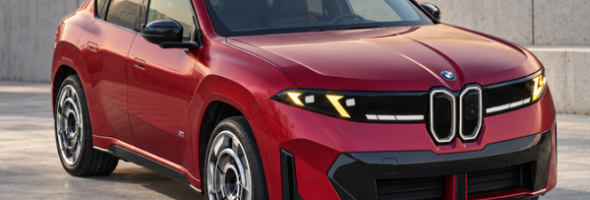
Not long ago, asking your car to play a song or provide turn-by-turn directions felt like a genuine technological leap. Today, those capabilities are considered the baseline. In-car AI assistants are undergoing a fundamental transformation — shifting from reactive tools that respond to spoken commands into proactive, intelligent systems capable of anticipating driver needs before a single word is spoken.
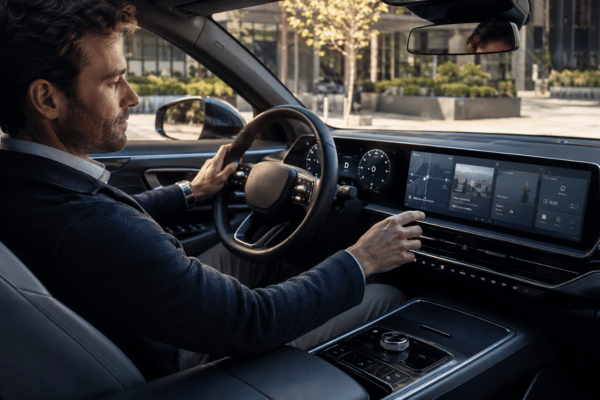
This evolution is quietly redefining what it means to interact with a vehicle, and its implications extend far beyond convenience.
From Commands to Context Awareness
The earliest generation of automotive voice assistants operated on a simple input-output model: the driver spoke a phrase, the system executed a task. That paradigm is giving way to something considerably more sophisticated. Modern in-car AI platforms are now designed to read context — processing data from multiple sources simultaneously to build a real-time picture of the driver’s situation, preferences, and likely intentions.
These systems draw on inputs that go well beyond the microphone. Cabin sensors, seat position data, eye-tracking technology, biometric indicators, calendar integrations, and even historical driving patterns are being woven together to give AI assistants a richer understanding of what a driver may need at any given moment.
The result is a system that might quietly lower the cabin temperature as a driver’s heart rate climbs in heavy traffic, or suggest an alternative route based on a meeting scheduled in the driver’s connected calendar — without waiting to be asked.
Personalization at the Core
One of the most significant shifts in next-generation automotive AI is the move toward deep personalization. Rather than offering generic responses, emerging platforms are designed to learn individual driver profiles over time. Preferred music genres during morning commutes, typical fuel stop intervals, favorite navigation shortcuts — all of this behavioral data informs an AI that adapts to the person behind the wheel, not just the task at hand.
This level of personalization is increasingly being supported by over-the-air software updates, meaning that a vehicle’s AI capabilities can grow and improve long after it leaves the factory floor. The car, in this sense, becomes a continuously evolving product.
Safety and Attention Monitoring
Beyond comfort and convenience, AI assistants are taking on a more critical role in active safety. Driver monitoring systems powered by artificial intelligence are now capable of detecting signs of fatigue, distraction, or cognitive overload — and intervening accordingly. Subtle visual or auditory alerts, automatic adjustments to seat vibration, or even gentle speed reductions can be triggered by an AI that has identified a potential risk before the driver has consciously recognized it.
This application represents one of the most meaningful ways in-car AI is moving past the role of a digital assistant and into the territory of an active co-pilot.
The Integration Challenge
Despite the rapid progress, significant challenges remain. Seamless integration across platforms — connecting in-car AI with smartphones, smart home ecosystems, and third-party services — requires substantial cooperation between automakers, technology companies, and software developers. Data privacy is another pressing concern, as the volume of personal information these systems collect raises legitimate questions about how that data is stored, used, and protected.
Automakers are navigating these complexities with varying degrees of transparency, and industry-wide standards for in-vehicle data governance are still taking shape.
A Fundamental Shift in the Cabin Experience
What is becoming clear is that the cabin of tomorrow will feel fundamentally different from the one we know today. The steering wheel and pedals will remain, but the relationship between driver and vehicle is entering a new phase — one defined less by manual control and more by intelligent collaboration.
In-car AI assistants are no longer just listening. They are learning, observing, and increasingly, acting. The voice command was only the beginning.