When consumers evaluate an electric vehicle, they typically focus on range, charging speed, and interior technology. Few consider what happens beneath the surface to keep all of those systems functioning reliably. Thermal management — the discipline of controlling heat within a vehicle’s battery, motor, and electronics — has become one of the most consequential areas of EV engineering, and its importance is only growing.
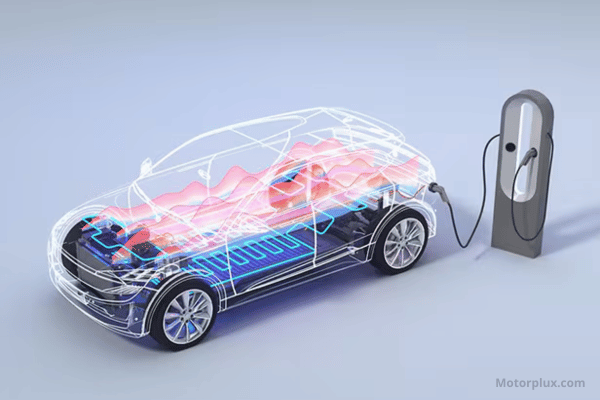
As manufacturers push batteries to deliver more power, charge faster, and last longer, the thermal conditions under which those batteries operate have become a defining factor in overall performance. Too much heat accelerates battery degradation. Too little, and the chemistry inside lithium-ion cells becomes sluggish, reducing range and charging capability. Finding the right balance is no longer a secondary concern — it is central to the product itself.
Why Temperature Control Matters More Than Ever
Modern EV batteries are highly sensitive to temperature extremes. In cold climates, drivers often experience a noticeable drop in range, a direct consequence of reduced electrochemical activity within the cells. In hot environments, sustained high temperatures can permanently damage battery capacity over time. Both scenarios represent real-world problems that affect consumer confidence and long-term ownership costs.
Fast charging compounds the challenge significantly. When large amounts of energy are pushed into a battery pack in a short period, heat is generated rapidly. Without an effective thermal management system, that heat can cause irreversible stress on the cells. This is why the race toward ultra-fast charging infrastructure is inseparable from advances in how vehicles manage heat at the battery level.
From Simple Cooling to Sophisticated Systems
Early electric vehicles relied on relatively basic approaches to thermal regulation, including passive air cooling or straightforward liquid circuits. Today’s leading systems are far more complex. Integrated thermal architectures now link the battery pack, the electric motor, the power electronics, and even the cabin climate system into a single coordinated network.
Heat pump technology has emerged as a particularly important development, allowing vehicles to recapture and redistribute heat rather than simply dissipating it. This efficiency gain has direct benefits for range, particularly in colder operating conditions where heating the cabin would otherwise place a significant burden on the battery.
Engineers are also exploring advanced materials for thermal interface layers, improved coolant formulations, and intelligent software controls that can anticipate thermal loads based on driving patterns, terrain, and ambient conditions. The shift toward software-defined vehicle platforms means thermal management strategies can increasingly be updated and refined over time, even after a vehicle leaves the factory.
A Competitive Differentiator for Automakers
For manufacturers, the ability to manage thermal performance effectively has become a meaningful point of differentiation. Vehicles that maintain consistent range across weather conditions, support faster charging without degradation, and preserve battery health over hundreds of thousands of miles represent a stronger value proposition to consumers.
As the EV market matures and buyers become more discerning, the technical quality of a vehicle’s thermal architecture will increasingly influence purchase decisions — even if most drivers never fully understand the engineering behind it. Industry analysts and automotive engineers broadly agree that this area of development will remain one of the most active and investment-intensive in the sector through the rest of the decade.
Looking Ahead
The evolution of thermal management is closely tied to the broader trajectory of battery technology. As next-generation chemistries, including solid-state cells, move closer to commercial production, thermal considerations will shift alongside them. Each new battery format brings its own set of thermal characteristics that engineers must account for from the ground up.
What is already clear is that the days of treating thermal management as an afterthought are long gone. It is now a foundational discipline that shapes how electric vehicles are designed, how they perform, and ultimately how they are experienced by the people who drive them every day.