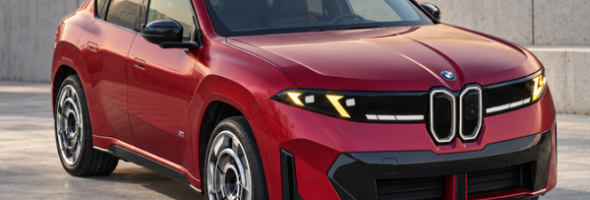
Every time a conventional vehicle slows down, kinetic energy is lost to heat through friction in the brake pads and rotors. For decades, this represented an unavoidable inefficiency baked into automotive design. Regenerative braking challenged that assumption entirely by proposing a different question: what if that energy could be captured and reused?
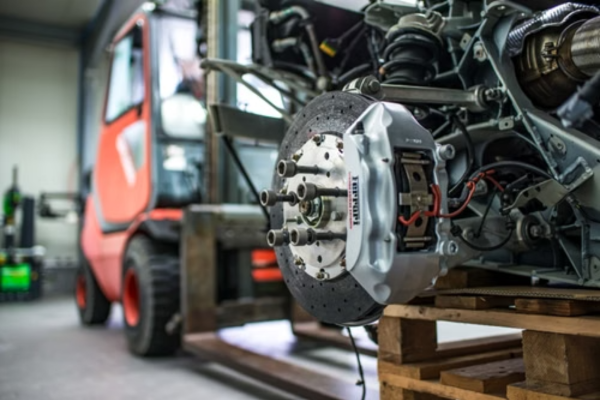
At its core, regenerative braking operates on a well-established principle of physics. When an electric motor runs in reverse — that is, when a spinning wheel drives the motor rather than the motor driving the wheel — the machine functions as a generator. The mechanical energy of the decelerating vehicle is converted into electrical energy, which is then routed back into the battery pack for later use. The result is a system that recovers a meaningful portion of the energy that would otherwise be wasted every time a driver lifts off the throttle or applies the brakes.
The Early Days: Hybrids Pave the Way
Regenerative braking did not begin with the modern electric vehicle revolution. Its practical automotive application can be traced back to the first generation of mass-market hybrid vehicles, which introduced the concept to everyday drivers in the late 1990s and early 2000s. These pioneering hybrids used relatively modest electric motors and smaller battery packs, meaning the amount of energy they could recapture was limited. Nevertheless, they demonstrated a proof of concept that would prove enormously influential.
Early hybrid systems primarily relied on regenerative braking during low-speed city driving — precisely the conditions where stop-and-go traffic creates frequent deceleration events. Engineers quickly recognized that urban environments, long considered punishing on fuel economy, were actually ideal for energy recovery. This insight shaped the development of hybrid technology for years to come.
How the Technology Has Matured
As battery technology advanced and electric motors became more powerful and efficient, regenerative braking systems grew significantly more sophisticated. Modern battery electric vehicles are capable of recovering a substantially higher proportion of kinetic energy compared to earlier hybrid systems, thanks to higher-capacity battery packs that can absorb greater electrical loads during braking events.
One of the most notable engineering advances is the development of blended braking systems. In a blended system, the vehicle’s control software seamlessly coordinates the regenerative motor braking with conventional hydraulic friction brakes. The driver experiences a consistent, natural-feeling brake pedal, while the electronics determine in real time how much deceleration should come from energy recovery and how much from mechanical friction. Achieving this coordination transparently — without the driver noticing any inconsistency — represents a genuine engineering challenge that took years of refinement to solve.
Another major evolution is the emergence of one-pedal driving. Many contemporary electric vehicles allow drivers to configure regenerative braking at a high enough intensity that simply releasing the accelerator pedal brings the car to a near-complete stop without touching the brake. This mode maximizes energy recovery and, once mastered, becomes a genuinely different — and for many drivers, preferred — way of interacting with the vehicle.
Adaptive and Predictive Systems
Perhaps the most forward-looking development in regenerative braking is its integration with vehicle intelligence systems. Modern platforms increasingly use navigation data, topographic maps, and real-time traffic information to predict when deceleration will be required. A vehicle descending a long grade, for instance, can begin recovering energy before the driver reacts, maximizing efficiency across an entire journey rather than responding only to immediate inputs.
This predictive capability represents a convergence between regenerative braking engineering and the broader trend toward software-defined vehicles. As vehicles become more connected and autonomous driving features expand, energy management — including braking recovery — is increasingly handled by intelligent systems operating continuously in the background.
A Technology Still Finding Its Ceiling
Regenerative braking has traveled a remarkable distance from its early, limited implementations in first-generation hybrids. Today it is a central pillar of electric vehicle efficiency strategy, and its underlying engineering continues to evolve alongside advances in power electronics, battery chemistry, and vehicle software.
What began as a clever application of basic physics has matured into one of the defining technologies of modern mobility — and its story is far from over.