For years, vehicle-to-infrastructure communication — commonly known as V2I — existed primarily in research papers, controlled pilot programs, and technology conference keynotes. It was the kind of innovation that everyone acknowledged as transformative but few expected to see deployed at scale anytime soon. That perception is changing rapidly, driven by a convergence of policy, engineering progress, and urgent demand for safer, more efficient roads.
What V2I Communication Actually Means
At its core, V2I technology enables vehicles to exchange data in real time with roadway infrastructure — traffic signals, speed limit signs, toll systems, construction zone alerts, and even pedestrian crossings. Rather than relying solely on what a driver can see or what onboard sensors can detect, a connected vehicle can receive direct signals from the environment around it.
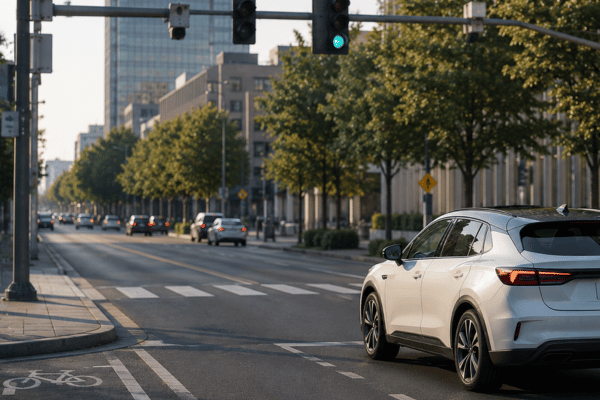
This two-way communication creates what engineers often describe as a cooperative awareness environment: the vehicle knows not just where it is, but what the road ahead is doing. A traffic signal can tell an approaching car precisely when it will turn green, allowing the vehicle to adjust its speed and avoid unnecessary braking. A highway management system can warn of sudden congestion or road hazards before they become visible.
Why Now? The Factors Accelerating Deployment
Several forces have aligned to push V2I from laboratory concept toward practical implementation.
- Improved connectivity standards: The development and gradual standardization of dedicated short-range communications and cellular-based C-V2X protocols has given manufacturers and infrastructure planners a clearer technical foundation to build upon.
- Government investment in smart infrastructure: Public funding directed at modernizing aging road networks has created real opportunities to embed connected technology at the infrastructure level, not just inside vehicles.
- The rise of advanced driver assistance systems: As vehicles become increasingly equipped with sensors, cameras, and processing power, the ability to integrate external data feeds becomes not only feasible but genuinely valuable.
- Urbanization and congestion pressures: City planners are under mounting pressure to improve traffic flow and reduce emissions without building new roads. V2I offers a software-driven path to meaningful efficiency gains.
The Safety Case Is Compelling
Beyond efficiency, the safety argument for V2I communication is difficult to dismiss. A significant proportion of road accidents occur because drivers lack timely information — about a stopped vehicle ahead, an obscured intersection, or a pedestrian about to cross. V2I systems can close those information gaps in milliseconds, providing warnings that arrive well before human perception would register a threat.
This is particularly relevant at intersections, which remain among the most dangerous points on any road network. When traffic management systems can communicate directly with approaching vehicles, the potential to reduce collision rates is substantial — and measurable in ways that justify continued investment.
The Challenges That Remain
Despite genuine progress, V2I deployment is not without complexity. Infrastructure upgrades require coordination between government agencies, technology providers, and vehicle manufacturers — stakeholders who do not always operate on compatible timelines or budgets. Cybersecurity also becomes a critical concern: a system that allows infrastructure to send commands to vehicles must be designed with robust protection against interference or malicious exploitation.
Interoperability is another persistent challenge. A vehicle manufactured in one country and driven across borders must be capable of communicating with infrastructure built to different regional specifications. Harmonizing these standards internationally is a slow, politically complex process.
A Transition Worth Watching Closely
What makes the current moment significant is not that V2I has suddenly solved all its problems, but that the problems now feel solvable. Pilot projects in multiple cities are producing real-world data. Automakers are beginning to design V2I compatibility into production vehicles rather than treating it as an afterthought. And infrastructure agencies are increasingly treating connectivity as a standard requirement rather than an optional upgrade.
The road from concept to reality is rarely straight. But for vehicle-to-infrastructure communication, the direction of travel is unmistakable — and the destination is closer than it has ever been.