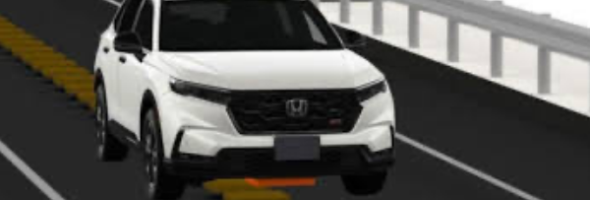
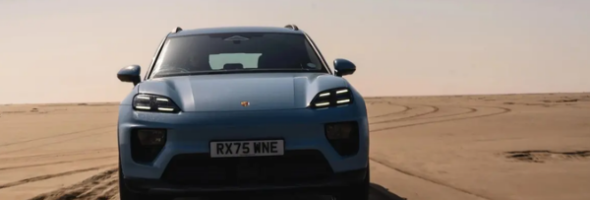
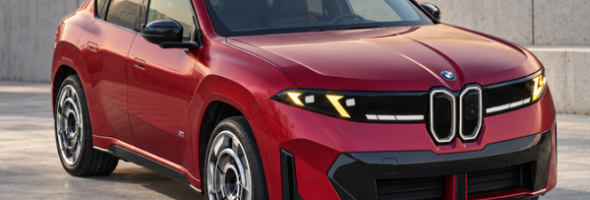
For years, LiDAR — Light Detection and Ranging — was considered the gold standard of autonomous vehicle sensing. Its ability to generate precise three-dimensional maps of the surrounding environment made it a cornerstone of early self-driving research. Yet today, the automotive industry is openly questioning whether this technology deserves the central role it has long been assigned.
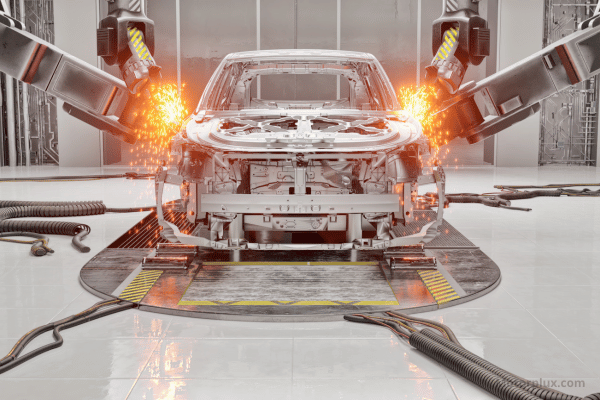
The shift is not about dismissing LiDAR outright. Rather, it reflects a broader and more mature understanding of what next-generation vehicles actually need — and what they can achieve through alternative or complementary approaches.
The Case Against Relying Solely on LiDAR
One of the most persistent criticisms of LiDAR has been its cost. Early units were prohibitively expensive, making mass-market deployment essentially impossible. While prices have declined significantly over time, integrating high-quality LiDAR systems into vehicles at scale remains a financial challenge for manufacturers operating on thin margins.
Beyond cost, there are functional limitations worth considering. LiDAR can struggle in certain weather conditions, including heavy rain, dense fog, and snow, all of which interfere with its laser pulses. For vehicles intended to operate across diverse climates and geographies, this represents a meaningful operational gap.
There is also the question of redundancy. Modern vehicles equipped with advanced driver-assistance systems often combine multiple sensor types — cameras, radar, and ultrasonic sensors — creating overlapping layers of perception. In this context, some engineers argue that LiDAR, while valuable, may not always justify its added complexity and expense.
Camera and Radar-First Approaches Gain Ground
Several major automakers and technology companies have publicly championed camera-based and radar-based systems as viable alternatives to LiDAR-centric architectures. The argument is straightforward: with sufficiently powerful artificial intelligence and high-resolution imaging, cameras can interpret the driving environment with remarkable accuracy at a fraction of the hardware cost.
Radar, meanwhile, offers proven reliability across adverse weather conditions and has decades of refinement behind it. When paired with sophisticated machine learning algorithms, radar-based systems can identify and track objects with increasing precision.
This perspective has influenced product strategies across the industry, prompting some manufacturers to launch vehicles without any LiDAR component while still positioning them as capable of advanced or semi-autonomous operation.
LiDAR’s Defenders and Its Evolving Role
Not everyone is ready to sideline LiDAR. A growing number of automakers and technology suppliers continue to invest heavily in the technology, arguing that its depth-sensing capabilities remain unmatched in complex, unpredictable environments — particularly for vehicles targeting higher levels of autonomy.
The technology itself is also evolving rapidly. Solid-state LiDAR units, which eliminate moving parts, promise greater durability, smaller form factors, and lower production costs. These advances could address many of the practical objections that have fueled skepticism.
For premium vehicles, robotaxis, and commercial trucking applications where safety margins are paramount, LiDAR may retain a critical role regardless of cost considerations. The debate, therefore, is less about elimination and more about appropriate application.
A More Nuanced Sensor Strategy
What is emerging across the industry is a more nuanced and pragmatic approach to sensor architecture. Rather than declaring any single technology the winner, automakers are increasingly designing systems where LiDAR, cameras, radar, and other tools complement one another based on the specific demands of a given vehicle and use case.
This shift reflects the industry’s growing engineering maturity. The question is no longer simply which sensor is best, but rather which combination of sensors, software, and AI delivers the safest, most reliable, and most cost-effective result for a particular platform.
Looking Ahead
As autonomous driving technology continues to advance, the debate around LiDAR will likely intensify before it resolves. What is clear is that automakers are no longer willing to default to any single solution. The future of vehicle perception will be defined not by loyalty to one technology, but by the rigorous, data-driven pursuit of the safest road possible.