For much of the past decade, wireless charging for electric vehicles existed primarily as a compelling concept shown on trade show floors and in manufacturer concept presentations. The technology worked in theory, and small-scale demonstrations proved its viability, yet it never quite crossed into mainstream automotive relevance. That dynamic is now changing, and the reasons behind the shift are worth examining closely.
A convergence of factors — maturing technical standards, growing EV adoption, and increasing pressure on the industry to reduce friction in the ownership experience — has placed wireless charging infrastructure firmly on the agenda of automakers, energy companies, and urban planners alike.
The Core Appeal: Eliminating the Plug
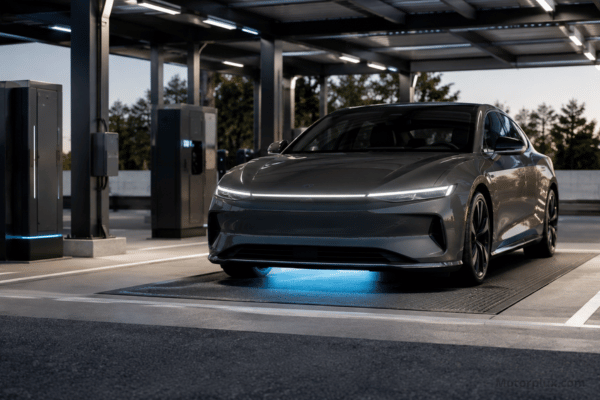
The fundamental promise of wireless, or inductive, charging is straightforward: a vehicle parks over a ground-mounted pad, and charging begins automatically without any physical connection required. For everyday drivers, this removes one of the most commonly cited minor inconveniences of EV ownership — remembering to plug in, managing cables, and dealing with connectors in poor weather conditions.
While this may seem like a comfort feature rather than a transformative one, industry analysts recognize that reducing charging friction plays a meaningful role in accelerating EV adoption among hesitant consumers. Convenience, in automotive markets, has historically driven purchasing decisions at least as much as performance or efficiency.
Standardization: The Missing Piece That Is Finally Arriving
One of the principal reasons wireless charging stalled for years was the absence of agreed-upon technical standards. Without a common framework, manufacturers had little incentive to invest in infrastructure that might only be compatible with a fraction of vehicles on the road.
That barrier is progressively being addressed. International standards bodies have made meaningful progress in defining specifications for power levels, communication protocols, and interoperability requirements for light-duty passenger vehicles. As these standards solidify, they create the kind of stable foundation that encourages long-term investment from both the automotive and energy sectors.
Automakers Are Paying Attention
Several major vehicle manufacturers have publicly acknowledged wireless charging as part of their longer-term product and infrastructure strategies. Premium and luxury segments have been the initial focus, which follows a familiar pattern in automotive technology adoption — new capabilities typically enter at the top of the market before filtering down to mainstream models.
Beyond passenger cars, fleet operators and commercial vehicle managers have shown particularly strong interest. For vehicles that follow predictable routes and return to fixed locations overnight, wireless charging pads embedded in parking areas represent an operationally elegant solution. Automated charging without driver intervention translates directly into reduced downtime and simplified fleet management.
Urban Infrastructure and the Bigger Picture
City planners and transportation authorities are also beginning to explore how wireless charging could be integrated into urban environments. Concepts such as dynamic wireless charging — where power is transferred to a vehicle while it is in motion along specially equipped road sections — remain largely experimental, but static wireless charging in designated parking zones is considerably closer to practical deployment.
As cities invest in smart infrastructure and seek ways to encourage EV adoption among residents without private garages or reliable access to home charging, publicly accessible wireless charging pads represent a credible part of the solution.
Challenges That Remain
Acknowledging the momentum does not mean the path forward is without obstacles. Efficiency losses compared to wired charging, installation costs for ground-embedded hardware, and the need to retrofit existing parking facilities all present genuine challenges. The technology must also demonstrate long-term durability under real-world conditions across varied climates and usage patterns.
Cost reduction at scale will be essential for wireless charging to move beyond premium applications and reach the broader market where its convenience benefits would have the greatest societal impact.
A Realistic but Optimistic Outlook
Wireless charging is not about to replace conventional plug-in infrastructure in the near term. What is changing is its credibility as a complementary solution — one that addresses specific use cases with genuine effectiveness and that the industry is now taking seriously enough to invest in at a structural level.
For an automotive sector undergoing its most significant transformation in generations, the maturation of wireless charging technology is one more indicator that the electric future will look considerably different — and considerably more seamless — than early EV adopters experienced.