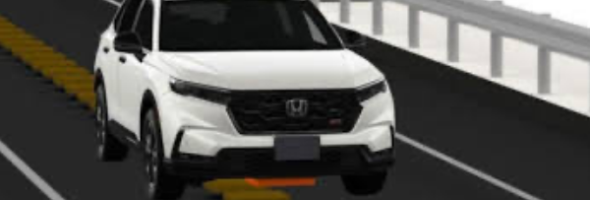
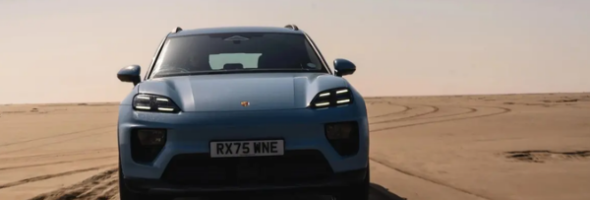
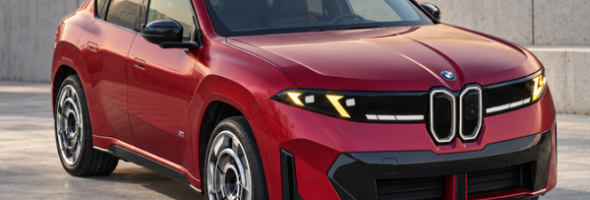
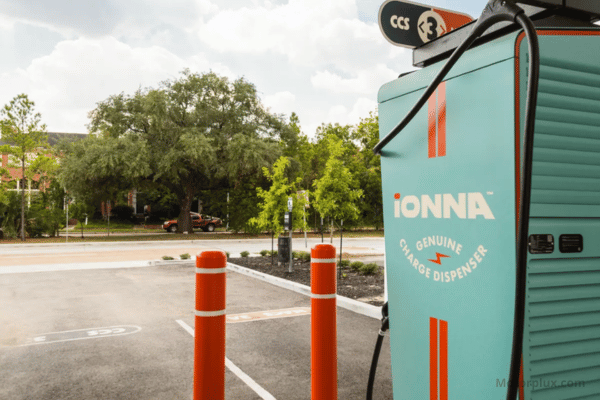
While much of the conversation around electric vehicles this year has focused on cooling sales and shifting automaker strategies, one corner of the EV world has been quietly accelerating: public fast charging. IONNA, the charging network founded by eight major automakers, announced at the end of September that it now operates more than 180 live charging sites across the United States, more than double its size at the start of 2026. It also took the top spot among DC fast-charging providers in the JD Power 2026 U.S. Electric Vehicle Experience (EVX) Public Charging Study, in its very first year of eligibility.
A network built by rivals
IONNA is unusual in the EV world. Rather than being the project of a single automaker, it is a joint venture owned by BMW, General Motors, Honda, Hyundai, Kia, Mercedes-Benz, Stellantis, and Toyota, eight companies that compete fiercely in showrooms but have chosen to cooperate on charging infrastructure. The company is based in Durham, North Carolina, and is now in its third year of operation. It describes itself as the largest 400 kW charging network in the United States, meaning its stations are designed to deliver the kind of ultra-fast speeds that can add substantial range in a matter of minutes for vehicles that support them.
Its stated ambition is a big one: installing 30,000 charging plugs by 2030. At the pace it has set this year, that goal looks less like a slogan and more like a plan.
The JD Power result
The strongest endorsement of IONNA’s approach so far is its showing in JD Power’s 2026 public charging study, published in August. IONNA scored 807 out of a possible 1,000 points, ahead of the Mercedes-Benz Charging Network at 797 and the Rivian Adventure Network at 755. Topping the ranking in the first year a network is even eligible is no small feat, particularly for a company that is expanding quickly, since rapid growth often comes at the expense of reliability and customer experience.
IONNA’s chief executive, Seth Cutler, framed the result as proof of a broader point: that the industry has treated charging scale and charging quality as a trade-off, and that drivers can and should expect both. He also acknowledged that sustaining that quality while growing from hundreds to potentially thousands of locations will be the real test.
Convenience stores as the secret to speed
A large share of the recent growth has come from an unlikely partner: Circle K. Since announcing the partnership in April, IONNA has brought more than 40 of what it calls Rechargeries online at Circle K convenience stores, giving drivers somewhere to grab a snack or coffee while their car charges. The company says usage at those sites has doubled since it took over operations and upgraded them, a sign that pairing fast chargers with everyday retail locations is resonating with drivers.
That strategy reflects a broader lesson the charging industry has been learning: where a charger sits matters almost as much as how fast it is. Convenience stores, with their long hours, lighting, restrooms, and food, offer a natural fit for the 15-to-25-minute stops that fast charging requires.
No app required
Another distinguishing choice is that IONNA has deliberately avoided building its own proprietary app. Instead, it has focused on integrating with the apps and payment systems drivers already use. New connections with Toyota and Lexus apps, along with Presto, ChargeHub, and EV Connect, bring the number of supported partner apps to 19. The company is also rolling out Plug & Charge capability, which lets a vehicle authenticate and pay automatically the moment it is plugged in, for Volvo, Toyota, and Lexus models starting in October.
Those moves aim at what is often the most frustrating part of public charging: friction. Anyone who has stood at a charger fumbling with multiple apps and accounts will appreciate an approach that tries to make the experience as simple as plugging in the cable.
Perks for drivers and a voice in the process
IONNA is also sweetening the deal with discounts. Drivers of BMW, GM, Hyundai, and Mercedes-Benz vehicles now qualify for 10 percent off charging through their automakers’ apps, and the company says the remaining founding automakers will soon join in. It has also offered promotions such as heavily discounted charging over holiday weekends to build awareness of new locations. To keep customer feedback in the loop as it scales, IONNA has created a Driver Advisory Council that will help shape future improvements to the network.
Why it matters
For anyone who has hesitated to buy an EV because of charging anxiety, the pace of IONNA’s expansion is genuinely encouraging news. Reliable, fast, well-located public charging remains one of the biggest factors shaping whether people feel comfortable going electric, particularly for road trips or for households without home charging. The fact that a network owned by eight rival automakers is both growing at breakneck speed and ranking first in customer satisfaction suggests that cooperation on infrastructure can pay off even when vehicle sales are uneven.
It also reinforces a trend worth watching: while the pace of EV adoption has slowed in some segments, the infrastructure that supports electric driving keeps getting better and more widely available. That should benefit owners of EVs and hybrids that can plug in, and it may help restore momentum to the EV market over the longer term.