A year after their high-profile merger talks fell apart, Nissan and Honda are back at the table — but with a very different, and arguably more promising, kind of partnership. Rather than attempting to combine into a single company, the two Japanese automakers are now working together on software and electronics technology aimed at the software-defined vehicles they expect to be building by 2029 and beyond. It’s a smaller, more focused collaboration than last year’s merger attempt, and one that plays to both companies’ actual strengths rather than trying to force two very different corporate cultures into one.
From a failed merger to a targeted alliance
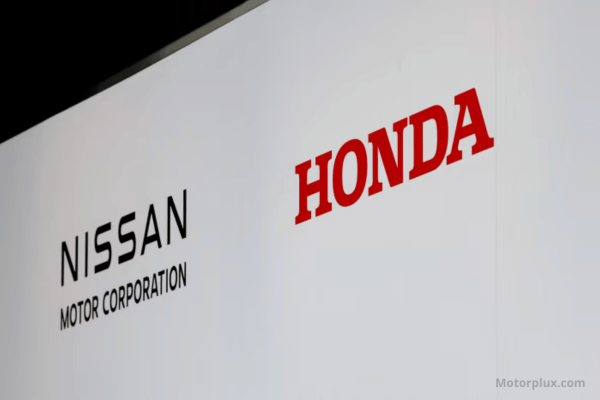
When Nissan and Honda walked away from merger discussions in 2025, it looked like the end of any meaningful cooperation between two of Japan’s largest automakers. Instead, both companies appear to have concluded that a full corporate combination wasn’t necessary to capture the benefits they were originally chasing — namely, the ability to share the enormous cost of developing next-generation vehicle software and electronics architecture, a challenge that has become one of the most expensive and technically demanding parts of building a modern car.
By narrowing their collaboration to software and tech specifically, rather than manufacturing, branding, or corporate structure, Nissan and Honda have found a way to pool resources on the parts of vehicle development where scale genuinely matters most, while keeping their separate brands, dealer networks, and vehicle lineups fully independent. That’s a meaningfully lower-risk way to cooperate than a merger, and it sidesteps many of the integration headaches — clashing management styles, overlapping product lines, labor and union complications — that likely contributed to the original merger talks collapsing in the first place.
Why software-defined vehicles are worth teaming up for
The technology at the center of this new partnership — software-defined vehicle architecture — represents one of the biggest shifts happening in the auto industry right now. Modern vehicles increasingly run on centralized computing platforms that control everything from driver-assistance features to infotainment to over-the-air updates, replacing the patchwork of separate mechanical and electronic systems that defined cars for decades. Building that kind of software stack from scratch is enormously expensive, and automakers around the world have been searching for ways to share the cost without necessarily sharing everything else about their business.
For Nissan and Honda, both companies bring genuine complementary strengths to a software-focused partnership. Honda has invested heavily in advanced driver-assistance systems and has global manufacturing scale that could benefit from a more efficient, shared software platform. Nissan brings its own electrification and connected-vehicle experience, along with a large global sales footprint that gives any jointly developed technology a wider base to be deployed across. Combining those strengths on the software side alone — without merging the broader companies — lets both automakers move faster toward the 2029 target for next-generation vehicles than either would likely manage entirely on its own.
A more realistic path to collaboration
Industry watchers have long argued that Japan’s auto industry, facing intense competitive pressure from faster-moving Chinese EV makers and software-first companies like Tesla, needs some form of scale to keep up on the technology side. The original Nissan-Honda merger attempt was, in many ways, an ambitious response to that pressure — an attempt to solve multiple problems (cost sharing, market scale, technology development) all at once through a single, sweeping corporate action. Its failure suggested that approach was too much, too fast.
This narrower software partnership looks like a more realistic answer to the same underlying pressure. Rather than betting everything on a single transformational deal, Nissan and Honda are focusing their cooperation specifically on the technology challenge that’s hardest to solve alone, while leaving the rest of their businesses — production, sales, branding — untouched. If it works, it offers a template other automakers facing similar cost pressures might reasonably follow: cooperate deeply on the expensive, shared technical challenges, and compete as normal everywhere else.
What it means for the vehicles you’ll eventually drive
For consumers, a successful software partnership between two major automakers could mean faster, more capable over-the-air updates, more robust driver-assistance features, and a smoother transition to fully software-defined vehicles across both brands’ future lineups — without sacrificing the distinct model lineups, pricing strategies, and dealer experiences that come with keeping Honda and Nissan as separate companies. It’s a lower-drama, lower-risk version of the ambitious plan the two automakers originally proposed, but one that may ultimately prove more durable precisely because it asks less of both organizations while still tackling the technology problem that mattered most in the first place.