For years, the prevailing assumption among automotive analysts was that the used electric vehicle market would take time — perhaps a decade or more — to develop meaningful depth and consumer confidence. That timeline is being rewritten at a pace few anticipated. The second-hand EV segment is not simply growing; it is structurally maturing, displaying the kind of price stability, buyer diversity, and transaction volume typically associated with well-established used vehicle categories.
What was once a niche corner of the automotive retail landscape, dominated by early adopters and fleet remarketing, is rapidly evolving into a mainstream channel for first-time EV buyers looking for an accessible entry point into electric mobility.
What Is Driving the Acceleration
Several converging forces are responsible for the unexpected pace of this evolution. First and perhaps most significantly, the first wave of mass-market electric vehicles is now aging into the used market in meaningful numbers. Models that were launched over half a decade ago are completing their original lease cycles and fleet contracts, creating a steadily expanding pool of pre-owned inventory at progressively lower price points.
Second, consumer confidence in battery longevity has grown. Early concerns about battery degradation — a primary psychological barrier to used EV adoption — have been partially addressed by real-world ownership data accumulated over years of widespread use. While battery health remains a consideration, buyers are increasingly informed and less fearful than previous market research suggested they would be.
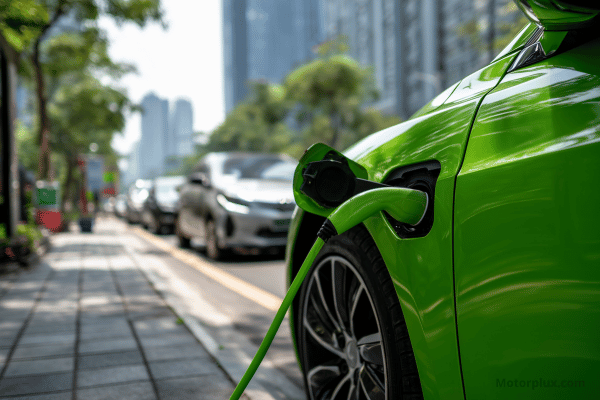
Third, the infrastructure landscape has improved substantially in most major markets. A used EV purchased today enters an environment with a considerably denser charging network than existed just a few years ago, making the ownership proposition significantly more practical for a broader range of consumers.
The Profile of the Used EV Buyer Is Changing
Perhaps the most telling indicator of market maturity is the shifting demographic profile of used EV buyers. Early transactions in this segment were disproportionately concentrated among technically confident consumers — individuals who understood battery management, knew how to evaluate state-of-health reports, and were comfortable navigating an unfamiliar ownership experience.
That profile is broadening. Buyers with no prior EV ownership experience are now entering the used market in growing numbers, often motivated primarily by fuel cost savings and secondarily by environmental considerations. This transition from niche to mainstream is a classical indicator of category maturation, and it is happening ahead of the curves most industry forecasters projected.
Pricing Dynamics Are Finding a New Equilibrium
Used EV pricing, which experienced considerable volatility during the supply disruptions and demand spikes of recent years, is showing signs of stabilization. While values for certain models have corrected from the inflated levels seen during peak demand periods, the market is not in freefall. Instead, pricing is settling into a more rational relationship with battery capacity, mileage, trim level, and model reputation — the same variables that govern used vehicle valuation in conventional combustion categories.
This normalization is a healthy signal. It suggests that the market is developing the institutional logic of a mature segment rather than behaving as a speculative category subject to erratic swings driven by novelty or scarcity.
Challenges That Still Require Attention
Maturation does not mean perfection. Transparency around battery health remains inconsistent across dealerships and private sellers, creating information asymmetries that can disadvantage less experienced buyers. Standardized, accessible battery health certification — analogous to vehicle history reports in the conventional used car market — remains an area where the industry has significant room to improve.
Additionally, access to reliable charging infrastructure outside major metropolitan areas continues to vary widely, which can limit the appeal of used EVs in certain regions regardless of how attractive the purchase price may appear.
A Signal Worth Taking Seriously
The faster-than-expected maturation of the second-hand EV market carries implications well beyond the used car lot. It suggests that the broader transition to electric mobility may be advancing along a steeper adoption curve than conservative models have assumed. For manufacturers, dealers, policymakers, and consumers alike, this is a development that deserves careful and sustained attention.
The used EV market is no longer an afterthought. It is becoming a foundational pillar of the electric mobility ecosystem — and it arrived sooner than almost anyone predicted.