For years, Toyota treated its plug-in hybrid lineup as a niche product reserved almost exclusively for California and the handful of other states that follow its zero-emission-vehicle mandate — roughly a dozen states in total. Dealerships outside that footprint might see one or two PHEVs a year, if any. That artificial scarcity kept national PHEV volumes low even as underlying interest in the technology kept building.
This year, Toyota lifted those restrictions and began distributing plug-in hybrids nationwide. The result has been dramatic: according to Automotive News, Toyota’s PHEV sales are up 38 percent so far this year through July, with July alone showing a jump of nearly 188 percent compared with the same month in 2025. That’s not incremental growth — it’s a sales curve that looks more like a product launch than a gradual expansion, driven almost entirely by pent-up demand finally meeting available supply.
The RAV4 PHEV is doing the heavy lifting
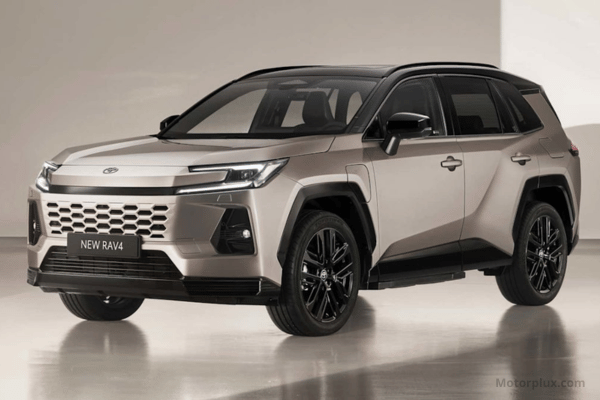
The redesigned RAV4 has been central to the surge, now offered with an expanded range of plug-in hybrid trims. Buyers can get into a base RAV4 SE PHEV for around $43,000, while a PHEV-exclusive RAV4 GR Sport trim starts just over $51,000. Spreading the plug-in powertrain across more trim levels — rather than treating it as a single specialty option — has given Toyota dealers a much wider net to catch interested buyers, and it shows in the numbers: the RAV4 remained Toyota’s best-selling model in July even as the standard RAV4 lineup posted a year-over-year sales decline, with the PHEV variants picking up a growing share of that mix.
Why now: gas prices, and a shrinking field of competitors
Two forces outside Toyota’s own product planning are amplifying the trend. First, elevated gas prices have made fuel-efficient vehicles broadly more attractive, and PHEVs offer a pitch that resonates with budget-conscious buyers: enough electric range to cover most daily commutes on electricity alone, with a gas engine as backup for longer trips — without the range anxiety or charging-infrastructure dependence of a full EV.
Second, Toyota’s competitive field in the plug-in hybrid space has been thinning. Several rivals — including Jeep, Chrysler, Dodge and Kia — have scaled back or pulled their own PHEV offerings from the US market this year, leaving fewer nationwide alternatives for shoppers who want the plug-in-hybrid compromise. That contraction elsewhere has made Toyota’s newly nationwide RAV4 PHEV one of the more visible options in a category with less competition than it had a year ago.
A small slice of a shrinking category — for now
It’s worth keeping the numbers in perspective. PHEVs as a whole remain a small part of the US new-vehicle market: plug-in hybrids accounted for just 1.1 percent of light-vehicle sales through June, according to data from Mobility Global, actually down from a 1.8 percent share over the same period last year, as the category has contracted industry-wide even as Toyota’s own slice of it grows. In other words, Toyota isn’t necessarily benefiting from a booming PHEV market — it’s benefiting from being one of the few automakers still expanding access to plug-in hybrids while others retreat.
Part of a larger hybrid-first strategy
The PHEV surge fits into a broader pattern for Toyota, which has leaned on what it calls a “Multi-Pathway” approach — offering gasoline, hybrid, plug-in hybrid and a handful of fully electric models side by side rather than betting heavily on one technology. That strategy already pushed Toyota’s combined hybrid and electrified sales to a 47 percent market share in 2025, and by the first quarter of 2026, hybrids alone accounted for more than half of the brand’s total US sales volume. Plug-in hybrids have been the smallest and slowest-growing piece of that electrified portfolio — until this year’s distribution change turned them into one of the fastest-growing.
Whether Toyota keeps expanding PHEV availability and dealer allocations through the rest of 2026 will determine if this is a lasting shift or a short-term catch-up effect as supply finally meets years of unmet demand. Either way, the numbers make one thing clear: for Toyota’s plug-in hybrids, the biggest obstacle to growth was never buyer interest — it was where the cars were actually being sold.