Walk into a modern showroom and you will notice something has quietly changed. The conversation is no longer exclusively about horsepower figures, fuel efficiency ratings, or even electric range. Increasingly, automotive brands are competing on how a vehicle feels from the inside — and ambient interior design has become one of the most strategic tools in that battle.
From Functional to Experiential
For decades, vehicle interiors were designed around function: ergonomic controls, durable materials, and logical layouts. Comfort mattered, but atmosphere was secondary. That philosophy is shifting rapidly as consumer expectations evolve and the definition of a premium experience expands well beyond the dashboard.
Today’s buyers, particularly those considering electric vehicles, spend more time stationary or in semi-autonomous driving modes. This changes the interior from a purely operational space into something closer to a personal environment — and automakers are responding accordingly.
Ambient lighting systems, customizable color zones, adaptive soundscapes, and material-texture combinations are no longer reserved for flagship luxury models. They are migrating across segments as manufacturers recognize their emotional and commercial value.
The Psychology Behind the Strategy
Automotive brands are leaning into a well-established truth from the hospitality and retail industries: environment shapes perception. A thoughtfully lit cabin can make a mid-range vehicle feel significantly more premium than its price point suggests. Conversely, a poorly conceived interior can undermine even the most capable mechanical package.
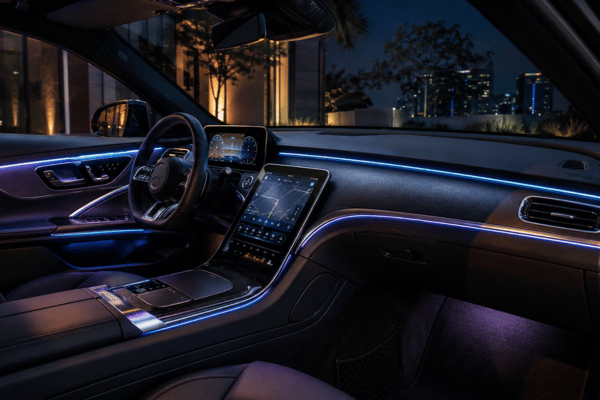
Ambient design elements — soft gradient lighting along door panels, illuminated stitching on seats, or gentle transitions between color tones based on driving mode — create what designers describe as emotional continuity. The vehicle responds to the driver’s context, not just their commands.
This emotional dimension is increasingly tied to brand identity. A manufacturer that consistently delivers a specific cabin atmosphere builds recognition that persists across model lines, much like a signature scent in a luxury hotel.
Software Makes It Scalable
One of the key enablers of this trend is the rise of software-defined vehicles. As more interior systems become digitally controlled, ambient settings can be updated, expanded, or personalized through over-the-air software updates — turning the cabin experience into a living product rather than a fixed one.
This creates compelling possibilities for automakers seeking recurring engagement with customers long after the initial sale. Seasonal themes, limited-edition lighting palettes, or driving-mode-linked atmospheres can all be delivered remotely, extending the product lifecycle and deepening brand loyalty without requiring a physical visit to a dealership.
Differentiation in a Crowded Market
As vehicle platforms increasingly converge — particularly in the electric segment, where shared architectures and similar range figures make technical distinction harder — interior experience becomes one of the clearest paths to meaningful differentiation.
When two vehicles offer comparable performance, efficiency, and technology, the cabin environment can tip a purchasing decision. Automakers understand this. Design studios that once focused primarily on exterior styling are now allocating substantial resources to interior atmosphere as a standalone discipline.
Luxury brands have long understood this equation, but the democratization of ambient technology is pressing mainstream manufacturers to raise their standards or risk appearing dated by comparison.
Looking Ahead
The direction of travel is clear. As vehicle interiors grow more complex — integrating larger displays, advanced audio systems, and increasingly sophisticated materials — ambient design will become a more integral part of how brands communicate their values and position themselves in the market.
For consumers, this means cabins that feel increasingly tailored, responsive, and intentional. For automakers, it represents both a significant creative opportunity and a new competitive frontier where the quality of the atmosphere they create may matter just as much as the quality of the engineering beneath the floor.
In the race to stand out, it turns out that how a car makes you feel on the inside has never mattered more.