For decades, the traditional automotive dealership stood as the undisputed gateway between manufacturers and buyers. Rows of vehicles gleaming under fluorescent lights, negotiation rooms, and commissioned sales teams defined the car-buying experience for generations. But that familiar landscape is changing — quietly, steadily, and with increasing urgency.
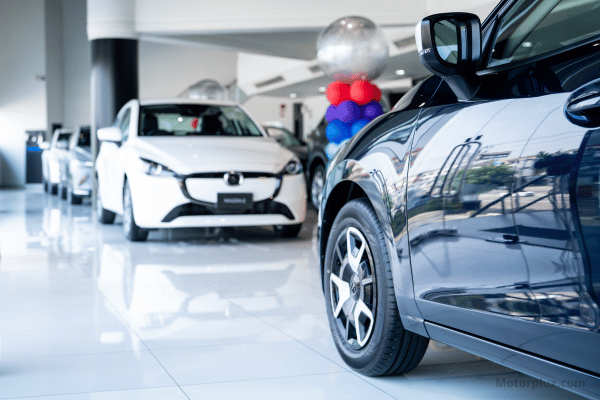
As digital platforms reshape consumer expectations across virtually every industry, automakers are confronting a fundamental question: what is the dealership actually for?
Shifting Consumer Behavior Is Driving the Change
Today’s car buyers arrive at dealerships having already done significant research online. They know the model, the trim level, the available colors, and often the target price before ever speaking with a sales representative. In many cases, they would prefer to complete the entire transaction — financing, documentation, and delivery scheduling — without setting foot in a showroom at all.
This behavioral shift has accelerated in recent years, particularly as automakers introduce direct-to-consumer digital sales channels. Several manufacturers have experimented with or fully adopted agency models, subscription-style purchasing platforms, and online configurators that allow buyers to place orders directly with the brand.
The result is a growing tension between traditional dealership networks, which have historically served as the backbone of automotive retail, and a new generation of digital-first sales strategies that challenge that arrangement at its core.
Electric Vehicles Are Reshaping the Conversation
The rise of electric vehicles has added another layer of complexity to this discussion. EV manufacturers — particularly newer entrants to the market — have built their retail models around direct sales from the start, bypassing the franchise dealership system entirely. Their showrooms, where they exist at all, are positioned less as transaction points and more as brand experience centers.
This approach has forced established automakers to reconsider their own strategies. Many are now exploring hybrid models that preserve dealership relationships while introducing more streamlined, transparent online purchasing experiences. The goal is not necessarily to eliminate the physical location, but to redefine its purpose.
From Transaction Point to Brand Experience
Industry observers increasingly suggest that the dealership of the future will function more like a premium retail boutique or an experience center than a conventional sales floor. The emphasis will shift from closing deals to building relationships — offering test drives, product education, software demonstrations, and post-sale service in a way that reinforces brand identity.
This transformation also reflects broader changes in vehicle technology. As cars become more software-defined and connected, ongoing customer relationships — for updates, maintenance, and feature activations — become commercially significant. Dealerships that can evolve into long-term service and loyalty hubs may find a sustainable role in this new ecosystem.
The Dealer Network: Obstacle or Opportunity?
Not everyone in the industry views the transition optimistically. Franchise dealership networks represent substantial investments in infrastructure, staffing, and local community ties. In many markets, they are also protected by legislation that limits how directly automakers can sell to consumers.
Navigating that legal and commercial landscape requires careful negotiation between manufacturers and their dealer partners. Some brands are working collaboratively with their networks to redesign the retail experience from within. Others are pursuing more aggressive restructuring strategies that have generated friction and legal disputes.
The path forward is unlikely to be uniform. Regional market conditions, regulatory environments, and brand positioning will all influence how individual automakers approach the question of physical retail.
A Necessary Evolution
What seems clear is that standing still is not a viable option. Consumer expectations have evolved, competitive pressures are intensifying, and the technology underpinning both vehicles and retail platforms continues to advance rapidly.
The automakers best positioned for long-term success will be those that treat this moment not as a threat to be managed, but as an opportunity to build a retail model genuinely suited to the way people buy — and live with — their vehicles today.
The physical dealership is not disappearing. But its role, its design, and its value proposition are being fundamentally reimagined.