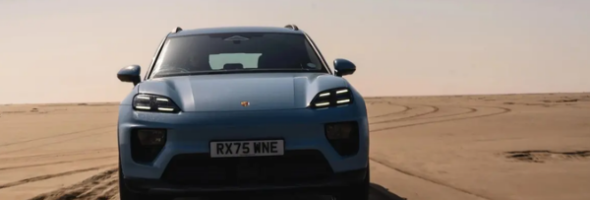
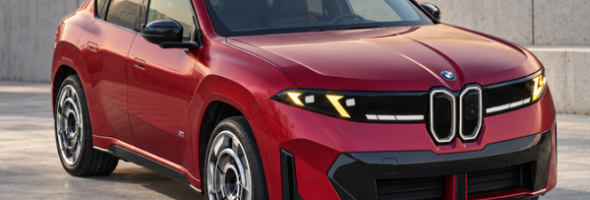
Not long ago, the idea of a family sedan owner caring about ground clearance or crawl control would have seemed far-fetched. Off-road capability was a niche concern — the domain of overlanders, farmers, and adventure enthusiasts willing to pay a premium for genuine trail performance. Today, that landscape has fundamentally shifted. Off-road features have migrated from the fringe of automotive marketing to the center of mainstream consumer expectations, reshaping the industry in ways that continue to accelerate.
From Specialty Segment to Standard Expectation
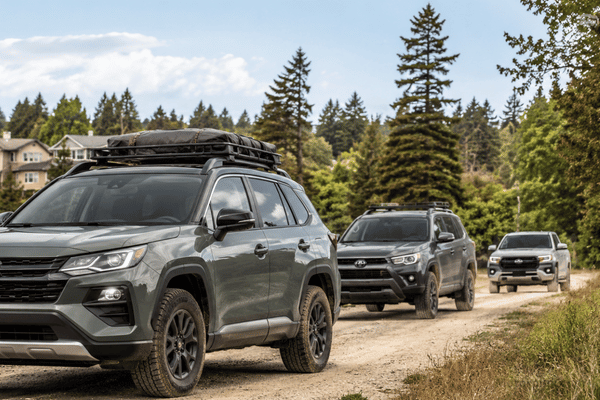
The transformation did not happen overnight. Over the past decade, the sustained growth of the SUV and crossover segment has played a decisive role. As consumers moved away from sedans and toward taller, more versatile vehicles, automakers responded by emphasizing ruggedness — even in models that were never intended to leave paved roads. What began as a visual and marketing strategy gradually evolved into genuine engineering investment.
Consumers began requesting features like all-wheel drive, skid plates, hill descent control, and terrain management systems not because they planned weekend trail runs, but because these capabilities communicated reliability, versatility, and confidence. The perception of readiness — the sense that a vehicle could handle whatever the road or the weather might present — became deeply appealing to a broad audience.
Lifestyle Branding Meets Real-World Demand
Automakers were quick to recognize that the desire for off-road capability often had more to do with identity than with actual usage. Campaigns featuring vehicles navigating mountain passes or river crossings reached consumers who primarily drove urban commutes. Yet rather than dismiss this as purely aspirational, manufacturers invested in making those capabilities genuinely accessible at lower price points.
The result is a market where off-road-oriented trim levels — special packages with enhanced suspension, all-terrain tires, and dedicated drive modes — have proliferated across segments that previously never offered them. Compact crossovers, midsize pickups, and even some passenger-car platforms now carry optional or standard off-road credentials.
Technology as the Great Equalizer
Advances in automotive technology have also played a significant role. Electronic systems can now simulate much of what once required mechanical sophistication, making it practical and cost-effective to include off-road features across a wider range of vehicles. Terrain response systems, electronic locking differentials, and advanced traction management have lowered the barrier to delivering genuine capability without demanding specialized expertise from the driver.
This democratization of technology means that a moderately priced SUV today may offer features that, a generation ago, were exclusive to high-end or purpose-built off-road platforms. Consumers are aware of this, and their expectations have risen accordingly.
The Electric Vehicle Factor
The electrification wave is adding yet another dimension. Electric drivetrains offer characteristics that are particularly well-suited to off-road performance: instant torque delivery, precise motor control at each wheel, and the ability to fine-tune power distribution with a speed and accuracy that combustion engines struggle to match. Several automakers have used this advantage to position electric SUVs and trucks as credible — and in some cases superior — off-road performers, further reinforcing consumer expectations that capable vehicles are the norm, not the exception.
What This Means for the Industry
For manufacturers, the mainstreaming of off-road expectations presents both opportunity and challenge. Meeting these expectations requires genuine engineering investment rather than superficial styling cues. Consumers have become more informed and more critical, and the gap between marketed capability and real-world performance is increasingly scrutinized through independent testing and community-driven reviews.
At the same time, the appetite for capable vehicles shows little sign of cooling. As long as consumers associate off-road readiness with durability, safety, and lifestyle aspiration, automakers who deliver authentically on that promise will hold a meaningful competitive advantage.
A Permanent Shift in Consumer Psychology
What was once a specialized feature set has become a baseline. Whether driven by lifestyle branding, technological accessibility, or a genuine desire for versatility, the expectation that a modern vehicle should be ready for more than smooth pavement is now deeply embedded in how consumers evaluate their purchases. For the automotive industry, adapting to that expectation is no longer optional — it is simply the price of relevance.