A long road trip is one of driving’s great pleasures — open highways, changing landscapes, and the freedom of the open road. But none of that matters if your vehicle isn’t ready for the journey. Proper preparation before a long drive is not just about convenience; it is a fundamental safety measure that every driver should take seriously.
Start with a Full Mechanical Inspection
Before any extended journey, scheduling a professional inspection at a trusted service center is strongly advisable. A qualified mechanic can identify issues that might not be immediately visible to the average driver. However, there are several checks you can perform yourself to establish a solid baseline.
- Engine oil: Check the oil level and condition. If you are approaching your next scheduled oil change, complete it before departing rather than during the trip.
- Coolant levels: Overheating is one of the most common causes of roadside breakdowns. Make sure the coolant reservoir is filled to the appropriate level.
- Brake fluid: Low or contaminated brake fluid can compromise stopping power, especially under sustained highway driving conditions.
- Power steering fluid: Often overlooked, this fluid is essential for comfortable and safe vehicle control during long periods of driving.
Tires: Your Most Critical Contact Point
Your tires are the only part of the vehicle in direct contact with the road, making them arguably the most important component to inspect before a long trip.
- Tire pressure: Check all four tires — including the spare — against the manufacturer’s recommended pressure, which is typically found on a sticker inside the driver’s door frame or in the owner’s manual.
- Tread depth: Worn tires significantly increase braking distances and reduce grip in wet conditions. Use a tread depth gauge or the coin test to assess wear.
- Visual inspection: Look for cracks, bulges, or any visible damage on the sidewalls. These are warning signs that a tire could fail unexpectedly.
Brakes, Battery, and Belts
Three critical systems deserve special attention before a road trip:
Brakes: If you notice any squealing, grinding, or increased stopping distances during your regular driving, have the brakes inspected immediately. Highway driving places sustained demand on the braking system, and worn pads or rotors can become a serious hazard.
Battery: A battery that struggles during short daily commutes will likely fail under the extended electrical demands of a long journey. Have the battery tested at any auto parts store — most offer this service free of charge. Pay attention to the age of the battery as well; most have a service life of three to five years.
Belts and hoses: The serpentine belt drives multiple engine components simultaneously. A cracked or fraying belt should be replaced before departure. Similarly, inspect visible hoses for soft spots, cracks, or leaks.
Prepare an Emergency Kit
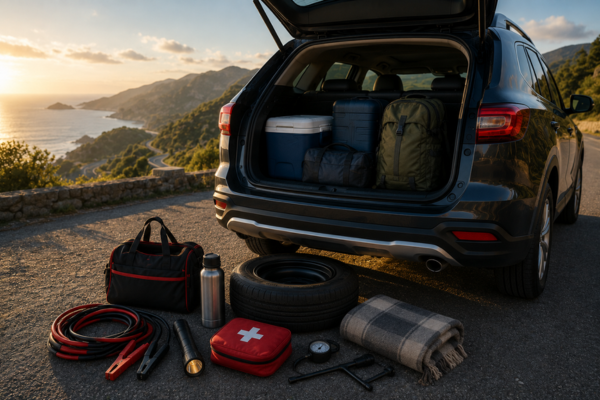
Even with meticulous preparation, unexpected situations can arise. Carrying a well-stocked emergency kit is a simple yet effective precaution. At a minimum, your kit should include:
- A reflective warning triangle or road flares
- A flashlight with fresh batteries
- Jumper cables or a portable jump starter
- A basic first aid kit
- Water and non-perishable snacks
- A phone charger or power bank
Plan Your Route and Fuel Stops
Technology has made route planning easier than ever, but it still requires human judgment. Identify fuel stops in advance, particularly when traveling through rural or remote areas where stations may be sparse. Download offline maps as a backup in case you lose cellular connectivity.
Final Thought
A long road trip should be an experience defined by discovery and enjoyment, not mechanical anxiety. Investing a few hours in thorough vehicle preparation before departure is a small price to pay for the confidence and peace of mind that comes with knowing your car is genuinely ready for the road ahead.