Every time you press the brake pedal, a complex system of components works together to bring your vehicle to a controlled stop. At the center of that system are the brake pads — friction materials that press against the brake rotor to slow the wheel’s rotation. Without properly functioning brake pads, stopping distances increase dramatically, and the risk of a collision rises with every kilometer driven.
Despite their critical function, brake pads are one of the most frequently neglected components in routine vehicle maintenance. Many drivers wait until they hear an alarming noise or feel a change in braking response before taking action. By that point, the damage may already extend beyond the pads themselves.
Key Warning Signs That Signal It’s Time to Replace
Recognizing the early signs of brake pad wear can mean the difference between a simple, affordable repair and a costly brake system overhaul. Pay close attention to the following indicators:
- Squealing or squeaking sounds: Most brake pads include a small metal wear indicator designed to produce a high-pitched noise when the pad material wears thin. This sound is intentional — it is an early warning, not a reason to delay action.
- Grinding noise when braking: A deep, metallic grinding sound suggests the pad material has been completely worn away, and metal is now contacting metal. At this stage, rotor damage is likely occurring with each stop.
- Longer stopping distances: If your vehicle takes noticeably more distance to come to a complete stop, reduced friction is a probable cause.
- Vibration or pulsation through the pedal: An uneven brake pedal feel can indicate worn or uneven pads, and in some cases, warped rotors resulting from prolonged pad neglect.
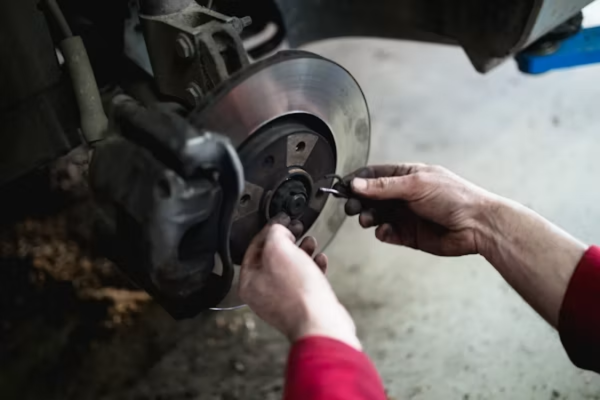
- Visual inspection: Through the wheel spokes, you can often see the brake pad resting against the rotor. If the pad appears thin — generally less than a quarter-inch of friction material — replacement should be scheduled promptly.
How Often Should Brake Pads Be Replaced?
There is no universal replacement interval for brake pads because wear depends on several variables: driving style, vehicle weight, road conditions, and brake pad composition. Aggressive city driving with frequent hard stops will wear pads significantly faster than steady highway driving.
As a general guideline, many automotive professionals recommend inspecting brake pads every time tires are rotated, typically every six months or at regular mileage intervals specified in the vehicle’s owner manual. A qualified technician can assess pad thickness and provide an honest evaluation of remaining service life.
It is also worth noting that front brake pads tend to wear faster than rear pads, as the front axle absorbs the majority of braking force during deceleration. For this reason, front and rear pads may not need to be replaced at the same time.
The Cost of Waiting Too Long
Delaying brake pad replacement carries both financial and safety consequences. When pads wear completely, the metal backing plate grinds against the rotor, causing surface damage that typically requires rotor resurfacing or full replacement — a significantly more expensive repair than simply replacing the pads on time.
Beyond the financial impact, compromised braking performance puts the driver, passengers, and other road users at serious risk. Braking systems are engineered with precision tolerance in mind; once any component falls outside its acceptable operating condition, the entire system’s effectiveness is reduced.
A Proactive Approach to Brake Maintenance
The most effective way to avoid brake-related safety risks is to treat pad inspection as a non-negotiable part of routine vehicle care. Rather than waiting for warning signs to appear, schedule periodic checks as part of your regular maintenance routine. Trust the sounds and sensations your vehicle communicates, and act on them early.
Brake pads are a relatively modest investment. The peace of mind — and the protection — they provide when properly maintained is immeasurable.