Few vehicles in automotive history carry the cultural and commercial weight of the Volkswagen Golf. Across multiple decades and generations, the German hatchback has served as a benchmark for the compact segment — setting standards in build quality, driving dynamics, and interior refinement. With the 2026 facelift now in focus, Volkswagen is making a calculated effort to keep the Golf relevant in an era defined by electrification, digital connectivity, and rapidly shifting consumer expectations.
This mid-cycle update is not a reinvention. Instead, it represents a disciplined evolution — one that addresses the areas where modern buyers expect progress while preserving the fundamental character that has made the Golf a consistent bestseller across global markets.
Design Updates: Subtle but Purposeful
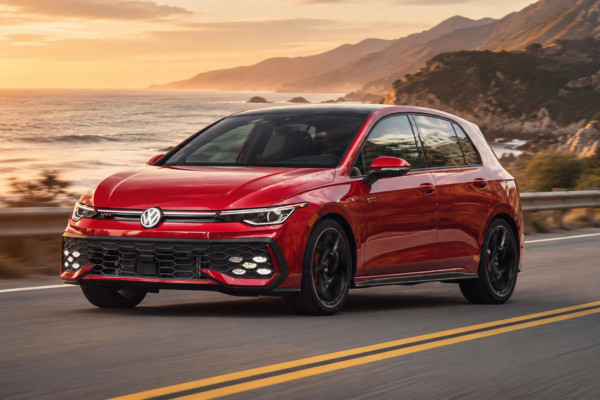
The visual changes introduced with the 2026 facelift follow a philosophy of refinement over transformation. The front fascia receives a cleaner interpretation, with revised lighting signatures that bring the Golf’s appearance closer to newer entries in the Volkswagen lineup. Slimmer headlight clusters and a reshaped lower grille contribute to a more contemporary look without abandoning the model’s familiar proportions.
At the rear, updated tail lamp graphics and minor bumper adjustments complete the exterior refresh. The overall silhouette remains instantly recognizable — a deliberate decision from Volkswagen, which understands that the Golf’s design continuity is part of its brand identity.
Interior and Technology: Where the Real Changes Happen
Inside the cabin, the 2026 Golf facelift reflects a more significant commitment to modernization. Volkswagen has addressed one of the more common criticisms of the current generation: the reliance on touch-sensitive surfaces for essential functions. The updated model reintroduces physical controls for frequently used features, improving usability without sacrificing the clean aesthetic of the dashboard.
The infotainment system receives an upgraded interface, with faster processing and a more intuitive menu structure. Wireless smartphone integration is expected to be standard across most trim levels, alongside an expanded suite of driver assistance technologies. Features such as adaptive cruise control, lane-keeping assistance, and improved parking systems are positioned to become more widely available throughout the range.
Powertrain Options: Efficiency and Electrification
The 2026 facelift preserves the Golf’s diverse powertrain strategy, which has long been one of its competitive advantages. Turbocharged petrol engines continue to form the backbone of the lineup, offering a balance of performance and fuel efficiency suited to a broad range of drivers.
The plug-in hybrid variant — marketed as the Golf eHybrid — is expected to play a more prominent role in the updated range. With growing regulatory pressure across European markets and increasing consumer interest in electrified options, Volkswagen is likely to expand the availability of this powertrain and enhance its electric-only driving range.
For performance-oriented buyers, the GTI and Golf R variants remain core pillars of the lineup, each expected to benefit from calibration updates that sharpen their respective driving characters.
Competing in a Transformed Market
The compact segment has never been more contested. Traditional rivals have strengthened their offerings, while electric-native alternatives are attracting a growing share of first-time buyers. The 2026 Golf facelift arrives at a moment when Volkswagen must demonstrate that a refined internal combustion and hybrid strategy can still command loyalty in a transitioning market.
What the update ultimately communicates is a clear message: the Golf does not need a radical overhaul to remain competitive. Its strength lies in consistency — in delivering a well-rounded, dependable driving experience that rewards everyday use. The facelift sharpens that proposition with measured improvements where they matter most.
A Calculated Step Forward
The 2026 Volkswagen Golf facelift will not generate the same headlines as a new generation launch, but it does not need to. By addressing real-world usability concerns, expanding electrified options, and maintaining the quality and character that define the nameplate, Volkswagen is reinforcing the Golf’s standing as one of the most enduring reference points in the global automotive industry.