Few vehicles carry as much cultural and commercial weight as the Ford pickup truck. For decades, it has defined the American road, dominated sales charts, and represented a standard of durability and utility that competitors have consistently struggled to match. Now, Ford is signaling that it is ready to raise that bar once again, unveiling what the automaker describes as the most comprehensive update to its pickup truck lineup in more than ten years.
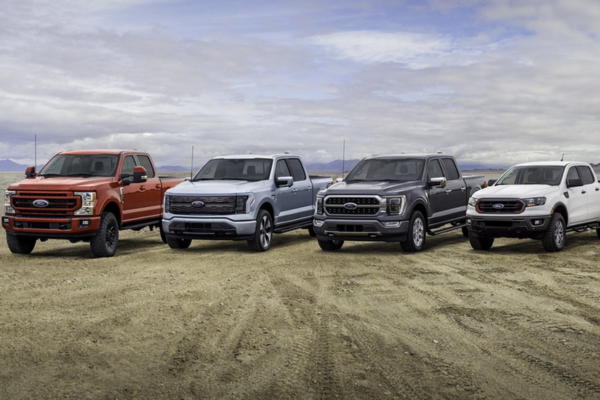
The announcement reflects a calculated move by Ford to consolidate its dominance in one of the most competitive and profitable segments of the global automotive market. At a time when rivals are pushing hard with their own innovations, Ford appears unwilling to rest on its legacy.
What the Update Encompasses
While full technical specifications are expected to be released in phases, the scope of the update is understood to span multiple dimensions of the vehicle experience. These include significant advances in powertrain efficiency, a redesigned cab interior with expanded technology integration, and structural improvements aimed at enhancing both payload capacity and ride refinement.
Particular attention has been paid to the driver interface. Modern truck buyers increasingly expect their vehicles to function as mobile workspaces and connected command centers, and Ford’s updated lineup appears designed with precisely that in mind. Larger display screens, improved voice control systems, and deeper integration with fleet management tools are all understood to be part of the package.
Electrification and Hybrid Options
The update also underscores Ford’s continued commitment to electrification within its commercial vehicle strategy. Hybrid configurations are expected to play a prominent role in the revised lineup, offering buyers a bridge between traditional internal combustion performance and the growing demand for improved fuel economy and lower emissions.
This approach reflects a broader industry trend in which automakers are expanding hybrid availability in segments that have historically been resistant to electrification. Truck buyers, particularly those in commercial and work-site applications, have often prioritized range and towing capability above all else — and Ford appears to be positioning its updated lineup to address those priorities without compromise.
Design Language Evolves
Beyond engineering, the exterior design language of the updated trucks marks a visible departure from the previous generation. Ford has reportedly pursued a more assertive visual identity, with bolder front-end styling, refined body lines, and a more upscale finish on higher trim levels. The goal appears to be a vehicle that communicates capability while also appealing to lifestyle-oriented buyers who use their trucks more on suburban roads than on job sites.
This dual appeal — functional toughness paired with premium aesthetics — has become increasingly important in the full-size truck segment, where luxury-trimmed models now command significant market share alongside work-grade variants.
A Competitive Landscape That Demands Bold Moves
The timing of Ford’s announcement is not coincidental. Competitors have been aggressively updating their own truck offerings, and the electric truck segment has attracted new entrants that are challenging traditional assumptions about what a pickup can be. In this environment, incremental updates are no longer sufficient for market leaders.
Ford’s decision to describe this as its most ambitious lineup update in a decade is itself a strategic message — one directed not only at consumers but at investors, dealers, and industry analysts watching closely to see how the Blue Oval plans to defend its position.
Looking Ahead
The full details of Ford’s updated pickup truck lineup are expected to emerge through a series of reveals and media events in the coming months. What is already clear is that the automaker is committed to reinforcing its identity in a segment that has long defined its commercial success.
For truck buyers, the message is straightforward: the next generation of Ford pickups is being built to set new expectations, not simply to meet existing ones.