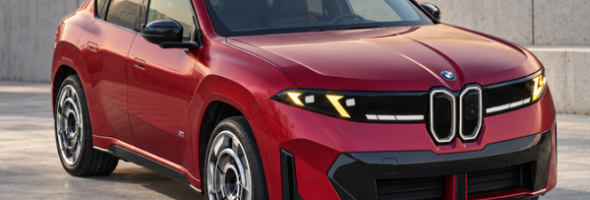
For most of automotive history, a car’s capabilities were fixed the moment it rolled off the assembly line. What you bought was what you got — and over time, those features would only diminish as components aged. That model is now being fundamentally challenged. Across the industry, major manufacturers are investing heavily in software platforms designed to continuously update, improve, and expand what a vehicle can do long after the point of sale.
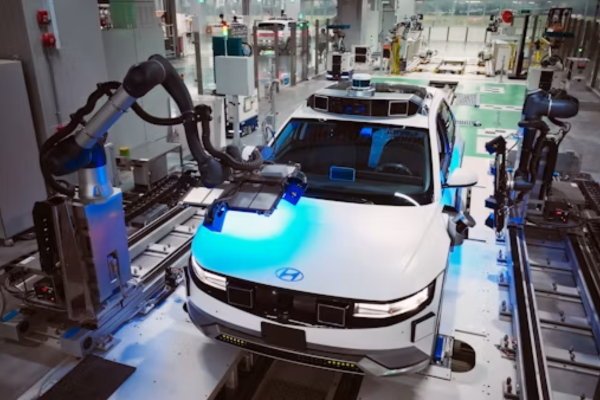
This shift represents more than a technical evolution. It signals a profound change in how automakers define their relationship with customers — and how they generate long-term value from a single vehicle sale.
Over-the-Air Updates: From Exception to Expectation
What was once a novelty introduced by a handful of technology-forward brands has rapidly become a baseline expectation across the automotive landscape. Over-the-air (OTA) software updates allow manufacturers to push improvements directly to a vehicle’s systems — from powertrain calibration and driver assistance features to infotainment interfaces and battery management algorithms — without requiring a dealership visit.
This capability transforms the vehicle from a static product into a dynamic platform. Manufacturers can respond to user feedback, fix vulnerabilities, introduce new features, and even unlock performance upgrades remotely. For consumers, this means the car they own today can, in meaningful ways, become a better version of itself tomorrow.
A Strategic Shift in Revenue and Retention
Beyond the user experience benefits, the business rationale for software investment is compelling. Traditional automotive revenue models depend almost entirely on the moment of sale. Software-driven strategies open the door to recurring revenue streams through subscriptions, feature unlocks, and service expansions that extend well beyond the initial transaction.
Brands investing in this direction are effectively rethinking what it means to “own” a vehicle. Rather than a one-time exchange, ownership becomes an ongoing relationship — one in which the manufacturer continues to deliver value, and the customer continues to engage with the brand’s ecosystem.
This also creates powerful retention dynamics. A vehicle that keeps improving is a vehicle owners are less likely to trade in prematurely, and a brand experience that evolves creates stronger loyalty over time.
Electric Vehicles as the Leading Edge
Electric vehicles have emerged as the primary proving ground for software-defined mobility. With fewer mechanical components and a deeper integration of electronics throughout the drivetrain, EVs are inherently better suited to software updates than their combustion-engine counterparts. Battery efficiency, regenerative braking behavior, charging speeds, and range estimates can all be refined through updates — giving manufacturers an ongoing opportunity to address early limitations and respond to real-world driving data.
As more traditional manufacturers accelerate their electric transitions, they are simultaneously building the software infrastructure needed to support this new model of continuous improvement.
Challenges on the Road Ahead
The transition is not without obstacles. Cybersecurity is a paramount concern — a vehicle that can receive remote updates is also, in theory, a vehicle that could be targeted by malicious actors. Manufacturers must invest significantly in secure development practices and communication protocols to ensure that OTA capabilities do not introduce new vulnerabilities.
There are also questions of consumer transparency. Customers need to understand what is being updated, why, and what changes to expect. Trust in this process is not automatic — it must be earned through clear communication and consistent positive outcomes.
Regulatory frameworks are also catching up. As software becomes central to vehicle safety systems, governments and standards bodies are working to establish clear guidelines for how updates should be validated and approved before deployment.
A Future Defined by Continuous Improvement
The automotive industry is converging on a new paradigm — one in which the vehicle is not a finished product but a continuously evolving platform. Brands that invest strategically in software today are not simply improving their current lineup; they are building the foundation for a fundamentally different kind of mobility business.
For consumers, the implications are largely positive: better performance, enhanced safety, and greater value over time. For the industry, the challenge is delivering on that promise consistently, securely, and transparently — at scale.