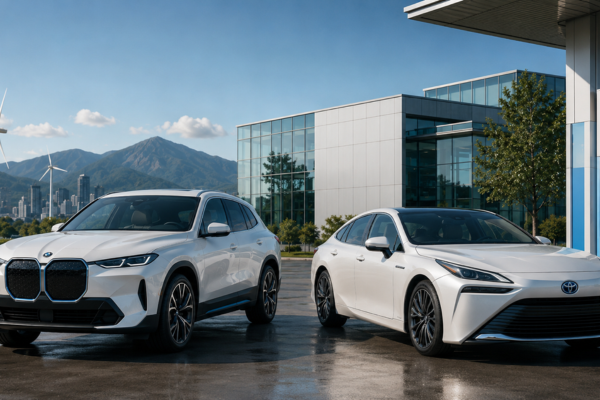
BMW and Toyota, two automotive giants with distinct identities but a shared commitment to sustainable mobility, are reinforcing their long-standing partnership with a renewed focus on hydrogen fuel cell technology. The collaboration signals a clear strategic move by both companies to position hydrogen as a credible and competitive alternative to battery-electric powertrains in the years ahead.
This deepened alliance reflects a broader industry conviction: that the transition to zero-emission transportation will not follow a single path. While battery-electric vehicles continue to dominate headlines and investment flows, hydrogen fuel cell technology offers compelling advantages in specific use cases, particularly for larger vehicles, long-range applications, and sectors where battery weight and charging infrastructure remain significant challenges.
Why Hydrogen, and Why Now
The timing of this renewed commitment is not accidental. Both BMW and Toyota have invested years of research into hydrogen fuel cell systems, and the technological maturity now makes deeper collaboration both practical and strategically sensible. Pooling engineering resources, sharing intellectual property, and co-developing key components allows both manufacturers to reduce costs and accelerate development timelines that neither could achieve as efficiently on their own.
Toyota has long been considered a pioneer in fuel cell technology, having introduced the Mirai sedan as one of the world’s first mass-produced hydrogen fuel cell vehicles. BMW, meanwhile, has been advancing its own hydrogen ambitions, including pilot programs with fuel cell variants of its X5 SUV. Together, the two companies bring complementary expertise and global reach to a technology that remains underexplored relative to its potential.
The Technical and Industrial Implications
At the core of the alliance is joint development of next-generation fuel cell stacks, hydrogen storage systems, and the broader powertrain architecture needed to bring hydrogen vehicles to market at scale. Standardizing certain components across both brands could play a meaningful role in bringing down production costs — one of the primary barriers that has historically prevented hydrogen vehicles from competing on price with conventional alternatives.
Beyond passenger cars, both companies appear to be eyeing hydrogen’s potential in commercial vehicles, motorsport, and industrial mobility applications. These segments offer near-term opportunities where hydrogen’s fast refueling times and high energy density provide clear operational benefits over battery-electric systems.
Infrastructure Remains the Central Challenge
No matter how advanced the vehicles become, hydrogen’s mainstream future hinges on one critical factor: refueling infrastructure. The global network of hydrogen stations remains limited compared to electric charging points, and expanding it will require sustained investment from governments, energy companies, and automakers alike.
Both BMW and Toyota have signaled awareness of this challenge, and their alliance may also serve as a platform for advocacy — encouraging policymakers and energy stakeholders to accelerate hydrogen infrastructure development. A coordinated voice from two globally respected brands carries considerable weight in shaping regulatory and investment priorities.
A Complementary Strategy, Not a Competing One
It is worth emphasizing that neither BMW nor Toyota is abandoning battery-electric development in favor of hydrogen. Both companies continue to invest heavily in BEV platforms and expand their electric lineups. Rather, the hydrogen alliance represents a parallel track — a hedge against technological uncertainty and a commitment to offering customers and fleet operators the right tool for the right application.
This dual-path approach reflects a mature and pragmatic view of decarbonization: one that acknowledges the diversity of mobility needs across different regions, industries, and use cases.
Looking Ahead
The deepening of the BMW-Toyota hydrogen alliance is a significant moment for the broader clean mobility industry. It demonstrates that large-scale automotive collaboration can serve as an effective engine for technological progress, particularly in areas that require substantial upfront investment and long development horizons.
As both manufacturers move forward, the industry will be watching closely — not only for the vehicles that emerge from this partnership, but for the signal it sends to competitors, investors, and policymakers about the enduring relevance of hydrogen in the future of transportation.