Artificial intelligence has moved well beyond the realm of science fiction and corporate buzzwords. Inside today’s vehicles, it operates quietly and continuously — processing data, anticipating conditions, and adjusting systems in ways that would have seemed extraordinary just a decade ago. The modern driving experience is being fundamentally redefined, not by a single breakthrough, but by the steady integration of intelligent systems across every layer of the vehicle.
From Reactive to Predictive: The Intelligence Behind the Wheel
Traditional vehicle systems were largely reactive — they responded to conditions after they occurred. A driver would apply the brakes; the antilock system would engage. A lane departure would trigger an alert. The logic was straightforward and rule-based.
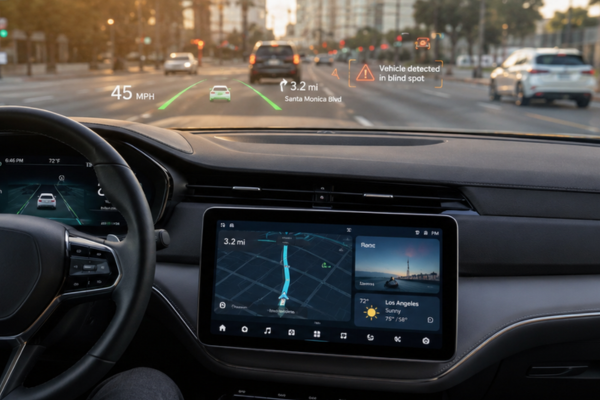
AI-driven systems operate on an entirely different principle. By analyzing patterns from cameras, radar, lidar, and onboard sensors simultaneously, these platforms can anticipate situations before they develop. Advanced driver assistance systems (ADAS) now adjust vehicle speed based on predicted traffic flow, not just the car immediately ahead. They recognize road signs partially obscured by weather, identify pedestrian behavior patterns, and respond to edge cases that no static algorithm could fully account for.
This shift from reaction to prediction represents one of the most significant changes in automotive engineering in generations.
The Cabin as an Intelligent Environment
AI’s influence extends well beyond safety and navigation. Inside the cabin, machine learning algorithms are transforming the relationship between driver and vehicle into something far more personalized and responsive.
- Voice and natural language interfaces now interpret conversational commands rather than requiring precise phrasing, allowing drivers to interact more intuitively while keeping their attention on the road.
- Driver monitoring systems use computer vision to detect signs of fatigue, distraction, or reduced alertness — issuing warnings or even intervening when necessary.
- Adaptive infotainment platforms learn individual preferences over time, adjusting everything from climate control defaults to navigation suggestions based on behavioral history.
The vehicle is no longer a passive machine. It is becoming an active participant in the driving experience, one that learns and adapts to the person behind the wheel.
Autonomous Driving: Progress Without Perfection
No discussion of AI in mobility is complete without addressing the question of autonomous driving. Progress in this area has been real but measured. Fully self-driving vehicles capable of operating in all conditions without human intervention remain a work in progress — a goal that requires not just more powerful AI, but better infrastructure, clearer regulation, and a deeper understanding of how humans and machines share responsibility on the road.
What has emerged in the interim is a practical middle ground: partial automation. Highway pilot features, automated parking assistants, and traffic jam assist systems have already reached consumers and are proving their value in real-world conditions. These incremental advances are building the data foundation and public trust that more ambitious autonomy will eventually require.
Data, Privacy, and the Road Ahead
The growing intelligence of vehicles raises legitimate questions that the industry cannot afford to ignore. AI systems depend on vast amounts of data — much of it generated by drivers themselves. How that data is collected, stored, and used is a critical concern for consumers, regulators, and manufacturers alike.
Automakers and technology partners are increasingly under pressure to establish clear standards around data transparency and user consent. The vehicles of tomorrow will only earn public confidence if the intelligence they carry is governed by principles as robust as the technology itself.
A Transformation Already Underway
It would be a mistake to speak of AI’s impact on driving as a future development. The transformation is already underway — present in the vehicles on today’s roads, in the software updates delivered overnight, and in the engineering decisions being made in design studios around the world right now.
For drivers, the implications are profound. The experience of operating a vehicle is becoming safer, more personalized, and progressively more intelligent. Understanding that shift — and engaging with it thoughtfully — is not just the job of engineers and policymakers. It is a conversation that belongs to everyone who gets behind the wheel.