Artificial intelligence has quietly become one of the most consequential forces reshaping automotive safety. No longer limited to driver-assistance features or autonomous driving experiments, AI is now working beneath the surface — analyzing data, detecting anomalies, and alerting drivers to potential mechanical failures before they become critical problems.
For automakers, this shift represents both a technological milestone and a competitive priority. As vehicles grow increasingly complex, traditional diagnostic approaches are proving insufficient. AI-driven systems offer a more dynamic, responsive alternative.
From Reactive to Predictive: A Fundamental Shift
Conventional vehicle diagnostics have historically been reactive. A warning light illuminates, a driver visits a service center, and a technician reads error codes. The process works, but it is inherently limited — it responds to problems that have already occurred.
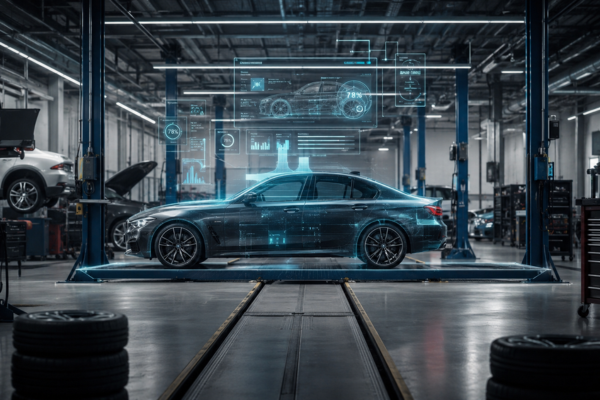
AI-powered diagnostics change this paradigm entirely. By continuously monitoring data from sensors distributed throughout the vehicle — covering the engine, brakes, transmission, battery systems, and more — intelligent algorithms can identify subtle patterns that signal developing issues long before a failure occurs.
This predictive capability has meaningful implications for road safety. A brake component showing early signs of wear, a battery cell degrading ahead of schedule, or a steering system operating outside normal parameters can all be flagged and addressed proactively, reducing the risk of unexpected breakdowns or accidents.
How the Technology Actually Works
At its core, AI-based vehicle diagnostics relies on machine learning models trained on vast amounts of operational data. These models learn what normal vehicle behavior looks like under a wide range of conditions — temperature, load, driving style, road surface — and develop the ability to detect deviations from those established baselines.
Modern vehicles generate enormous volumes of sensor data during every drive. AI processes this information in real time, filtering noise and identifying signals that warrant attention. When the system detects a meaningful anomaly, it can notify the driver through the vehicle’s interface, send an alert to a connected service platform, or — in the most advanced implementations — automatically schedule a service appointment.
Over-the-air software updates have further expanded these capabilities, allowing manufacturers to refine diagnostic algorithms continuously without requiring a physical visit to a dealership.
Automakers Investing in the Space
Across the industry, leading manufacturers are integrating AI diagnostics into their vehicle architectures as a core feature rather than an optional add-on. Premium and mass-market brands alike are developing proprietary platforms designed to monitor fleet-wide performance data, identify systemic issues, and improve vehicle reliability at scale.
Electric vehicles have accelerated this trend. Battery health is one of the most critical — and complex — variables in EV ownership, and AI has proven highly effective at monitoring cell-level performance, predicting range degradation, and identifying thermal management concerns before they escalate.
The commercial vehicle segment has also embraced the technology enthusiastically. Fleets operating trucks, delivery vans, and buses benefit enormously from predictive maintenance, as unplanned downtime carries significant financial consequences.
Benefits Beyond the Driver
The advantages of AI-powered diagnostics extend well beyond individual vehicle owners. Manufacturers gain access to aggregated performance data that informs quality control decisions, accelerates recall identification, and improves future vehicle designs. Service networks become more efficient, with technicians arriving better prepared and parts ordered in advance.
From a regulatory standpoint, more accurate and transparent diagnostics also support emerging requirements around vehicle safety reporting, particularly as governments in multiple regions tighten standards for connected and autonomous vehicles.
Looking Ahead
The integration of AI into vehicle safety diagnostics is still evolving. As sensor technology improves, data volumes increase, and machine learning models grow more sophisticated, the accuracy and scope of these systems will continue to expand.
What is already clear is that the industry has moved past treating AI as a novelty. For automakers serious about safety, reliability, and customer trust, intelligent diagnostics have become an essential part of the equation — one that is only expected to grow more central in the years ahead.