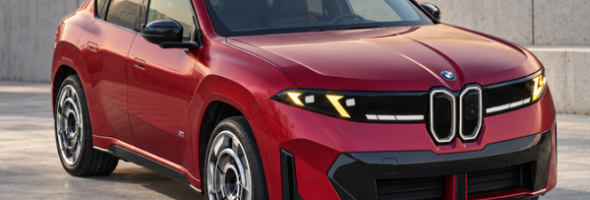
Ten years ago, connecting a smartphone to a vehicle was considered a premium feature reserved for high-end models. Today, seamless digital integration is not only expected across virtually every segment — it is a core part of how drivers interact with their cars on a daily basis. The evolution of in-car connectivity systems over the past decade represents one of the most significant shifts in automotive design and engineering since the introduction of electronic fuel injection.
The Early Days: Bluetooth and Basic Integration
At the beginning of the last decade, in-car connectivity was largely defined by Bluetooth hands-free calling and rudimentary audio streaming. Infotainment screens were present in many models, but their interfaces were often slow, difficult to navigate, and largely disconnected from the broader smartphone ecosystem.
The introduction of Apple CarPlay and Android Auto marked a pivotal turning point. By mirroring a driver’s smartphone interface onto the vehicle’s display, these platforms offered a familiar, intuitive experience that quickly became a benchmark expectation rather than a differentiating luxury. Automakers who were slow to adopt these standards faced growing criticism from consumers who had little patience for proprietary systems that underperformed.
The Rise of Over-the-Air Updates and Embedded Connectivity
As the decade progressed, the concept of the vehicle as a static, fixed product began to erode. Over-the-air (OTA) software updates — pioneered in the consumer electronics industry — found their way into automotive platforms, allowing manufacturers to improve infotainment features, fix software bugs, and even enhance vehicle performance without requiring a dealership visit.
Embedded SIM cards and always-on LTE and, eventually, 5G connectivity transformed vehicles into genuinely connected devices. This enabled real-time navigation with live traffic data, remote diagnostics, predictive maintenance alerts, and cloud-based voice assistants capable of processing complex commands without relying solely on the phone in a driver’s pocket.
Toward the Digital Cockpit: Screens, Voice, and AI
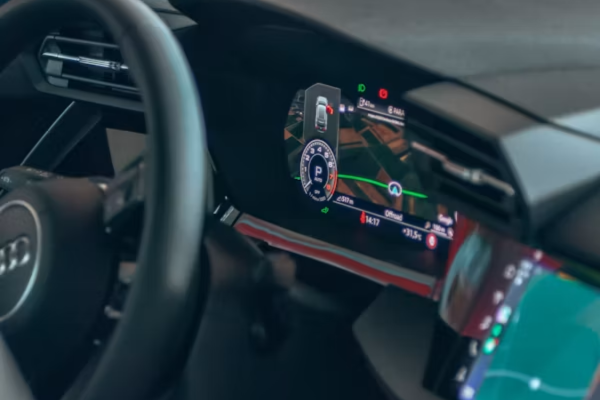
Perhaps the most visible symbol of this evolution is the modern digital cockpit. Large, high-resolution touchscreens have replaced analog instrument clusters in many vehicles, consolidating controls for climate, audio, navigation, and vehicle settings into a single interface. Some manufacturers have taken this further by eliminating physical buttons almost entirely — a decision that continues to divide consumer opinion.
Voice recognition technology has also matured considerably. Early voice command systems were notoriously unreliable, often misunderstanding requests or offering only a narrow range of functions. Today’s AI-powered assistants can understand natural language, learn driver preferences over time, and integrate with smart home ecosystems, streaming services, and calendar applications with a level of fluidity that would have seemed remarkable just a few years ago.
Connectivity as a Safety and Efficiency Tool
Beyond convenience, modern connectivity systems play an increasingly important role in road safety and vehicle efficiency. Vehicle-to-infrastructure (V2I) and vehicle-to-vehicle (V2X) communication technologies are being developed and tested in several markets, allowing cars to receive real-time information about traffic signals, road hazards, and the movements of nearby vehicles.
Connected platforms also enable more sophisticated driver assistance features, feeding data to systems that monitor fatigue, alert drivers to lane departures, and support advanced parking functions — all of which rely on a continuous flow of information between sensors, software, and cloud-based processing.
What the Next Chapter Looks Like
The trajectory of in-car connectivity shows no signs of slowing. Software-defined vehicles — where much of the driving experience is shaped by software layers rather than hardware alone — are becoming the industry’s new standard. Automakers are increasingly positioning themselves as technology companies, investing heavily in proprietary operating systems, digital ecosystems, and subscription-based connected services.
For drivers, this means a future where the vehicle continuously adapts, learns, and improves over its lifetime. For the industry, it signals a fundamental rethinking of what a car actually is — and how it fits into an increasingly interconnected world.
In-car connectivity has moved from a selling point to a foundation. The vehicles of today are not simply transport; they are platforms — and that distinction will define automotive development for decades to come.