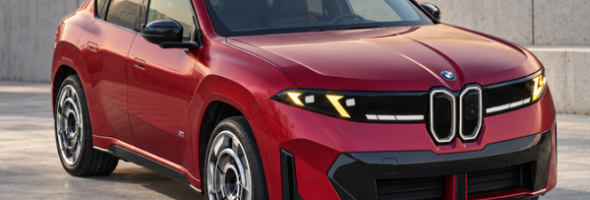
For years, the conversation around electric vehicles has circled back to the same fundamental challenge: range anxiety. Despite significant progress in lithium-ion battery technology, many drivers remain cautious about making the switch to electric, concerned about how far their vehicle can travel on a single charge. Now, a new generation of energy storage technology — solid-state batteries — is generating serious attention across the automotive and energy sectors, with many experts pointing to 2030 as a potential turning point.
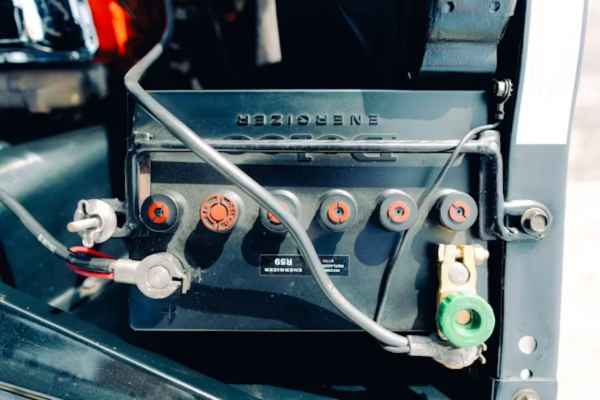
What Makes Solid-State Batteries Different
At the core of the solid-state battery concept is a fundamental shift in chemistry. Traditional lithium-ion batteries use a liquid electrolyte to carry ions between the anode and cathode. Solid-state batteries replace that liquid with a solid material — typically a ceramic, glass, or polymer compound — which carries significant implications for both performance and safety.
This structural change addresses several longstanding limitations of conventional EV batteries:
- Higher energy density: Solid-state designs can theoretically store more energy in the same physical space, which directly translates to greater driving range per charge.
- Improved safety: The elimination of flammable liquid electrolytes reduces the risk of thermal runaway, one of the most serious failure modes in current battery packs.
- Faster charging potential: Solid electrolytes may support faster ion transfer rates, enabling quicker recharge times without the same degradation risks seen in liquid-based systems.
- Longer cycle life: Early research suggests solid-state cells could maintain capacity over a greater number of charge and discharge cycles compared to existing technology.
Where the Industry Stands Today
Several major automakers and battery manufacturers have made solid-state development a strategic priority. Investment in this space has grown substantially over the past several years, with partnerships forming between established automotive brands and specialized battery startups. The technology is no longer purely theoretical — prototype cells and small-scale production tests are underway in multiple regions.
However, the path from laboratory results to mass-market production remains complex. Manufacturing solid-state batteries at scale presents engineering challenges that have slowed commercialization timelines. Achieving consistent quality, managing material costs, and building the necessary supply chains are all obstacles the industry is actively working to overcome.
The 2030 Horizon
The automotive industry widely views the late 2020s as the window in which solid-state batteries could begin appearing in production vehicles in meaningful volumes. While initial applications may target premium segments — where cost constraints are less restrictive — successful deployment at that level could accelerate broader adoption across vehicle categories.
If solid-state batteries deliver on their theoretical promise at scale, the impact on EV range could be transformative. Vehicles that currently offer competitive but not exceptional range could see substantial improvements without requiring larger, heavier battery packs. This would also benefit overall vehicle efficiency, since carrying less weight to achieve the same range improves performance across the board.
Beyond Range: A Broader Shift in EV Perception
It would be an oversimplification to frame solid-state batteries purely as a range solution. Their potential contributions to safety, longevity, and charging infrastructure compatibility could reshape how consumers and fleets think about electric vehicle ownership over time. A battery that charges faster, lasts longer, and poses fewer thermal risks is not just a technical improvement — it is a confidence builder for a market still in the process of building trust with the average driver.
The journey to solid-state mass production is still unfolding, and caution is warranted when evaluating timelines in a field where breakthroughs have historically arrived slower than anticipated. Nevertheless, the momentum behind this technology is real, and its trajectory suggests that by 2030, the electric vehicle landscape could look meaningfully different from what it does today.
For automakers, suppliers, and consumers alike, solid-state batteries represent one of the most consequential bets in the near-term future of mobility.