Electric vehicles have long been celebrated for what they consume — clean energy, fewer emissions, reduced fuel costs. But a growing number of automakers are now focused on what EVs can give back. Bidirectional charging technology, once a niche engineering concept, is rapidly becoming one of the most strategically important features in the modern automotive landscape.
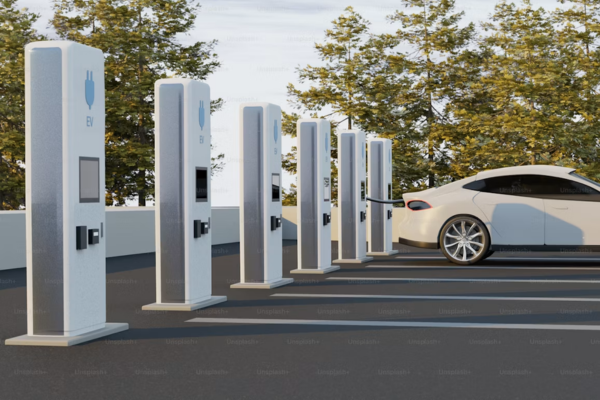
What Is Bidirectional Charging?
At its core, bidirectional charging — commonly referred to as Vehicle-to-Grid (V2G), Vehicle-to-Home (V2H), or Vehicle-to-Load (V2L) — allows an electric vehicle to not only receive power from an external source but also discharge stored energy back into the grid, a home, or other devices. In practical terms, an EV equipped with this capability functions as a mobile energy storage unit, capable of powering household appliances during an outage or feeding electricity back to the grid during peak demand periods.
The technology itself is not entirely new, but recent advancements in battery management systems, software integration, and grid infrastructure have brought it much closer to mainstream viability.
Why Automakers Are Doubling Down
The automotive industry’s enthusiasm for bidirectional charging stems from several converging forces. First, there is the growing pressure to differentiate EVs beyond range and performance. As electric vehicles become increasingly common, manufacturers are searching for features that justify consumer investment and build long-term brand loyalty. The ability to power your home during a storm or earn credits by feeding energy back to the grid is a compelling value proposition that goes well beyond the traditional vehicle sale.
Second, regulatory environments in major markets are beginning to favor energy flexibility. Governments across Europe, North America, and parts of Asia are developing frameworks that incentivize grid-responsive technologies. Automakers that position themselves early in this space stand to benefit from both policy tailwinds and utility partnerships.
Third, the rise of renewable energy adoption at the residential level has created a natural demand for smarter energy management. Homeowners with solar panels, for instance, can use their EV as a battery buffer — storing excess energy during daylight hours and deploying it at night. This integration between clean mobility and clean energy infrastructure is a vision that resonates strongly with the target EV buyer demographic.
A Strategic Shift in How Vehicles Are Valued
Perhaps the most significant implication of bidirectional charging is what it means for the perceived value of a vehicle. Traditionally, a car depreciates the moment it leaves the dealership. But an EV with V2G capabilities introduces the concept of an asset that can generate financial or practical returns over time. For fleet operators and commercial buyers, this calculus is particularly attractive.
Automakers are beginning to frame their electric vehicles not merely as transportation solutions, but as intelligent energy nodes within a broader ecosystem. This repositioning has implications for product marketing, dealer education, insurance models, and even long-term residual values.
Challenges That Still Need to Be Addressed
Despite the momentum, bidirectional charging faces meaningful obstacles. Standardization remains a key concern — without universal protocols, the interoperability between vehicles, home energy systems, and grid operators becomes fragmented. Battery longevity is another consideration, as frequent charge and discharge cycles can affect long-term cell health, though modern battery management systems are increasingly designed to mitigate this risk.
Consumer awareness also lags behind the technology itself. Many potential buyers remain unfamiliar with V2G or V2H capabilities, and the hardware required for home installation — such as compatible inverters and smart meters — adds cost and complexity to the adoption journey.
The Road Ahead
Bidirectional charging is not a passing trend. It represents a fundamental rethinking of what an electric vehicle can be — not just a cleaner way to travel, but an active participant in the energy economy. As grid infrastructure modernizes and consumer education improves, the technology is poised to move from a premium differentiator to a standard expectation.
For automakers, the question is no longer whether to invest in bidirectional charging, but how fast they can bring it to market at scale. Those who move decisively now may find themselves at the center of an energy revolution that extends far beyond the road.